- Bays Available Today
- Bays Available Today
- Bays Available Today
- Bays Available Today
- Bays Available Today
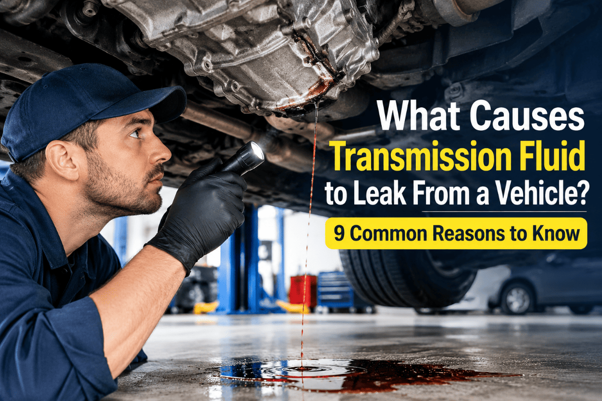
A small red or brown puddle under your car might look harmless, but it could point to a transmission problem. Transmission fluid helps the gears shift, reduces friction, and keeps key parts cool. When the fluid level drops, the transmission faces more heat and wear, which raises the risk of costly repairs.
At 616 Auto Repair, we help drivers understand the signs of vehicle trouble and take the right steps to fix them. Learning the causes of transmission fluid leaks helps you spot warning signs early and protect your vehicle from further damage. From worn seals to loose parts, several issues lead to fluid loss. Knowing what to look for helps you act before a small leak turns into a major repair.
Transmission fluid leaks start when a seal, gasket, line, or other part loses its ability to hold fluid. The source depends on the vehicle’s design, age, and service history. Here are the main problems our team checks during an inspection.
1. Damaged Transmission Pan Gasket
The transmission pan holds fluid at the bottom of many transmissions. A gasket seals the pan against the transmission housing. Over time, heat, age, or poor installation damages the gasket and allows fluid to escape.
A damaged transmission pan gasket often leaves wet marks around the pan’s edge. A loose pan bolt or a bent pan also causes leaks. Our technicians inspect the pan and gasket before deciding whether the parts need repair or replacement.
2. Worn Transmission Seals
Seals prevent fluid from escaping around moving parts and connection points. Heat and normal wear cause these seals to harden, crack, or lose their shape. Once a seal fails, fluid starts to seep from the affected area.
Leaks near an axle seal or the transmission input or output shaft need prompt attention. The exact repair depends on the seal’s location and how hard it is to reach.
3. Cracked or Loose Transmission Fluid Lines
Transmission fluid lines carry fluid between the transmission and the cooler in many vehicles. Road debris, corrosion, worn fittings, or loose connections damage these lines. A crack or poor connection allows fluid to drip or spray from the system.
Look for fresh fluid near the lines or cooler connections. A fast leak needs urgent service, since the transmission loses fluid quickly and risks serious internal damage.
4. Improper Transmission Fluid Installation
Incorrect service work also leads to leaks. Improper transmission fluid installation includes fitting a gasket incorrectly, leaving a drain plug loose, or failing to secure a line after service. Using the wrong fluid type or filling the system to the wrong level creates other transmission problems.
After a fluid change, watch for fresh spots under the vehicle, new shifting issues, or a burning smell. Contact a repair shop if these signs appear.
5. Cracked Transmission Pan or Housing
A hard impact from road debris, a curb, or a rough road damages the transmission pan. In more severe cases, the transmission housing itself develops a crack. Fluid then escapes through the damaged area.
A cracked pan may need replacement. Damage to the housing calls for a closer assessment to determine whether a repair or larger replacement job is the right choice.
Read More :- What Factors Affect the Total Cost of an Engine Replacement Service?
A leak becomes easier to spot after a vehicle sits in one place for a few hours. Fluid collects beneath the area where it escapes and forms a puddle on the ground. However, the puddle’s location does not always point to the exact source, since fluid travels along nearby parts before dripping.
If you are asking why your transmission is leaking fluid, start by checking for warning signs without crawling under an unsupported vehicle. Note the fluid’s color, the size of the puddle, and any changes in gear shifting.
Transmission fluid is often red or pink when fresh, but it turns brown as it ages. Color alone does not confirm the source, since engine oil and other vehicle fluids also leave dark spots.
Our team performs a professional transmission fluid leak inspection to trace the fluid to its source. We check seals, gaskets, lines, fittings, and the pan, then recommend the repair based on the findings.
Driving with a transmission leak puts the gearbox at risk. Low fluid levels reduce lubrication and cooling, which leads to excess heat, poor shifting, and internal wear. In severe cases, the transmission stops working and needs major repairs.
Watch for these warning signs:
Stop driving if the leak is heavy, the transmission slips, or the vehicle struggles to move. Arrange a tow rather than risking further damage. Never check beneath a car supported only by a jack.
The right transmission fluid leak repair starts with finding the exact source. Adding fluid alone does not solve the problem, and using the wrong fluid risks further damage.
At 616 Auto Repair, our repair process focuses on the cause of the leak. Depending on the findings, the work includes:
The cost depends on the leak’s location, the parts needed, and the labor required to reach them. A simple gasket replacement costs less than a repair involving an internal seal or damaged housing.
Good care helps keep the transmission in sound condition. A car transmission maintenance service includes checks based on the vehicle maker’s schedule and the type of transmission fitted to your car.
Follow these steps to reduce the risk of leaks:
Regular checks help catch wear before it leads to a larger repair bill.
A transmission leak deserves attention, even if your car still drives well. Finding the source early helps protect internal parts and reduces the risk of a major repair.
At 616 Auto Repair, we inspect transmission concerns, explain our findings, and recommend repairs suited to your vehicle. If you spot a puddle, notice slipping gears, or smell burning fluid, contact our team to schedule an inspection. Let us help you address the leak and get back on the road with greater confidence.
Frequently Asked Questions
Common causes include worn seals, a damaged transmission pan gasket, cracked fluid lines, loose fittings, and a damaged pan. Poor service work also leads to leaks. A full inspection helps identify the exact source.
Fluid often drips onto the ground after leaking from a seal, gasket, line, or pan. The puddle’s position offers a clue, but a technician must trace the leak to confirm its source and plan the repair.
Yes. Seals and gaskets keep fluid inside the transmission. Heat, age, and wear cause them to crack or lose their shape. Replacing the faulty part helps restore a proper seal and protect the transmission from low fluid levels.
Driving with a leak risks low fluid levels, excess heat, poor shifting, and internal damage. Stop if fluid loss is heavy or gears slip. Arrange professional help rather than risking a breakdown or a costly transmission failure.
Follow the manufacturer’s service schedule, use the correct transmission fluid, and inspect the vehicle for fresh puddles. Ask a technician to check seals, lines, and gaskets during routine service. Prompt repairs help prevent small leaks from growing.