- Bays Available Today
- Bays Available Today
- Bays Available Today
- Bays Available Today
- Bays Available Today
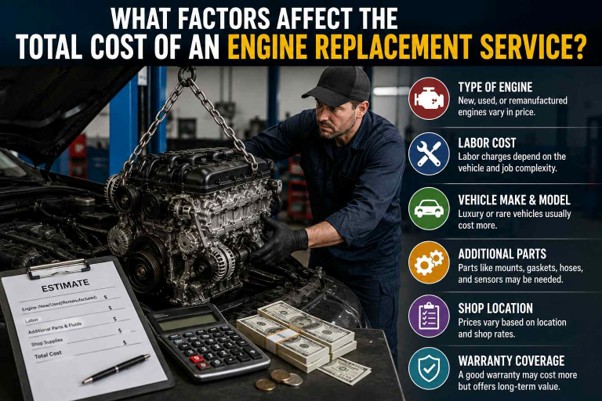
A dying engine puts every driver in a tough spot fast. One shop quote comes in low, another comes in sky-high, and it gets confusing trying to figure out why. Understanding what factors affect the total cost of an engine replacement service helps you plan instead of getting blindsided at the counter. At 616 Auto Repair, we break every estimate down clearly, so you always know what you’re paying for.
No two engine jobs cost the same, even on similar-looking cars. Several moving pieces stack together to shape the final bill, and skipping any of them gives you a number that won’t hold up once the real work starts.
Picking the right engine changes your total cost more than almost anything else on this list. Weighing new vs. rebuilt vs. remanufactured engines upfront helps you avoid overspending on a part your car doesn’t really need.
New Engines
A brand new engine costs the most upfront, but it comes straight from the manufacturer with zero wear. This option suits drivers who plan to keep their car for many years down the road.
Rebuilt Engines
Rebuilt engines use your original block, with worn parts replaced and machined back to spec. They cost less than new units and work well for drivers watching their budget closely.
Remanufactured Engines
Remanufactured engines get torn down, inspected, and rebuilt to factory standards using a mix of new and refurbished parts. They fall in the middle price-wise and offer solid, dependable performance.
Labor Costs and Time on the Job
Parts are only half the story. The hours a skilled technician spends on your car add up fast, and that labor plays a huge role in your final bill.
How Labor Gets Calculated
Shops charge an hourly rate multiplied by the estimated time the job takes. Harder-to-reach engines and tight bays push that number higher without changing the part cost at all.
Read More :- How to Diagnose Engine Misfires When the Check Engine Light Turns On
How Long Does an Engine Replacement Take
How long does an engine replacement take? Most jobs run between eight and fifteen hours, depending on the vehicle. Trucks and older cars with simpler layouts often go faster than newer, tightly packed engine bays.
Why Trained Technicians Matter
Cutting corners on labor rarely saves money in the long run. Skilled, certified engine repair experts catch small issues before they become big ones, keeping your new engine running strong for years.
Additional Repairs That Add to the Bill
Engine replacement rarely happens in isolation. Related parts often need attention too, and skipping them now usually means paying for them later anyway.
Knowing what is included in an engine replacement service matters just as much as the price tag itself. A proper job covers far more than dropping in a new engine block.
A thorough job includes full removal of the old engine, careful inspection of surrounding parts, installation of the new unit, and complete testing before your car leaves the shop. Every fluid gets checked, every connection gets verified, and nothing gets rushed through.
Not every car costs the same to work on, even with a similar engine size. A few factors tied to your specific vehicle push the price up or down.
Read More :- How Professional Engine Diagnostics Can Save Your Money on Repair
Your car engine replacement cost comes from combining parts, labor, and any extra repairs into one clear total. A reliable and trustworthy auto repair shop explains every detail before starting, ensuring no surprises at the end of the job.
Staying current on your engine maintenance service between major repairs also stretches your engine’s life and delays costly replacements. Routine checkups often catch small problems while they’re still cheap to fix, long before they turn into a full engine swap.
Our friendly, knowledgeable team treats every engine job with the same careful attention, whether it’s a routine checkup or a full replacement. We keep our pricing honest and our explanations clear, so you never feel talked over. Choosing an established engine replacement service means fewer surprises and a car you can trust again.
Guessing at engine costs never ends well. Bring your car to 616 Auto Repair Shop, and let our reliable team give you a clear, honest breakdown before any work begins. We’ll walk you through every option so you can make the choice that fits your budget and your car.
Engine type, labor hours, and vehicle make drive most of the cost. This is exactly what factors that affect the total cost of an engine replacement service, along with any extra repairs uncovered during the job.
Rebuilding often costs less upfront, while replacement offers longer-lasting reliability. Comparing new vs. rebuilt vs. remanufactured engines helps you pick the option that fits your budget and driving plans.
Labor typically makes up thirty to fifty percent of the total bill. Complex engine bays and tight spaces increase the hours needed, which raises the labor portion further.
Yes, imported engines and performance trims often cost more to source and install. Common domestic models usually have more affordable parts and quicker labor times available.
A proper job covers full removal, inspection, installation, and complete testing. Our certified engine repair experts verify every connection, including any needed engine coil replacement, before handing your car back to you.