- Bays Available Today
- Bays Available Today
- Bays Available Today
- Bays Available Today
- Bays Available Today
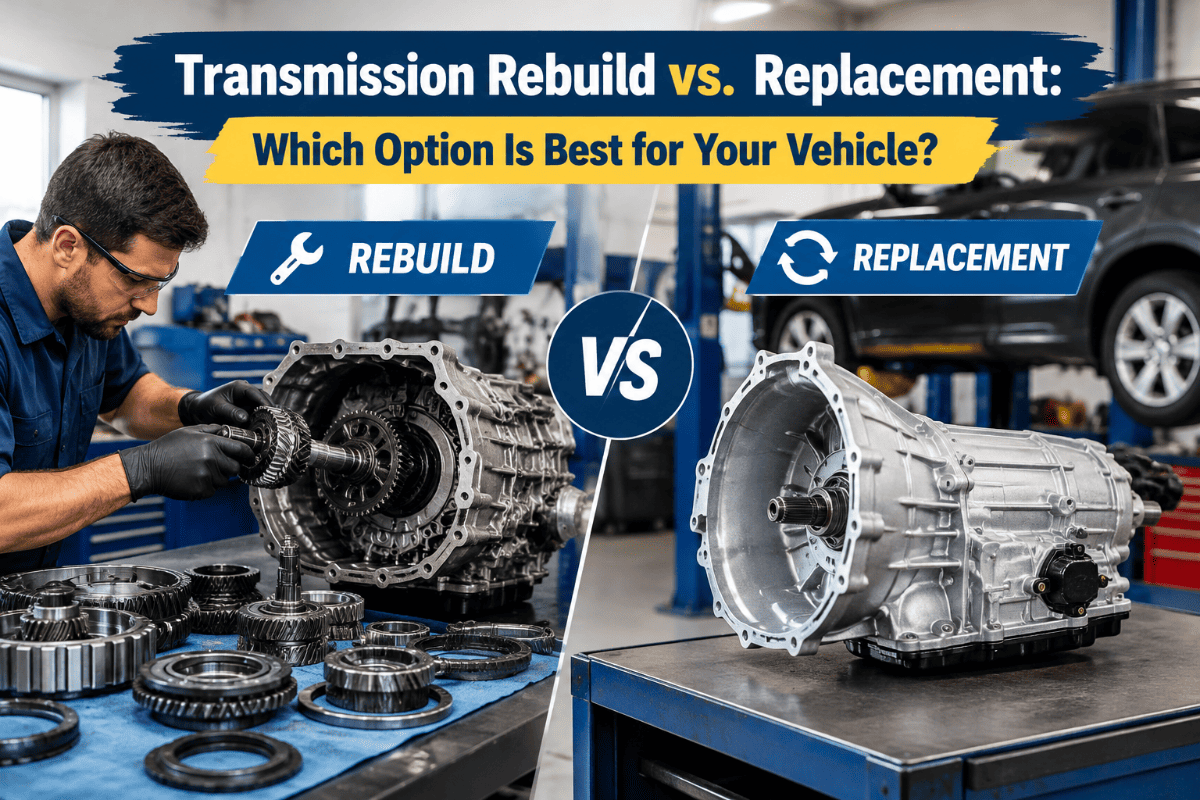
A faulty transmission can turn a smooth drive into a stressful experience. Your car might struggle to change gears, slip out of gear, or make strange noises while moving. When these problems appear, one important question comes up: should you rebuild the transmission or replace it? The right choice depends on the damage, repair costs, vehicle age, and long-term plans.
At 616 Auto Repair, we help drivers understand their repair options before they commit to major work. A professional transmission rebuilding service restores worn or damaged parts inside the existing unit, while replacement involves fitting another transmission. Both options have clear benefits, but the best solution starts with a proper inspection and an honest assessment of your vehicle’s needs.
A transmission transfers engine power to the wheels and helps your vehicle move at the right speed. Over time, worn parts, low fluid levels, heat, and poor maintenance affect how it works. Rebuilding and replacement address these issues in different ways.
Transmission Rebuilding
A rebuild involves disassembling the transmission, inspecting its internal parts, and repairing or replacing worn or damaged components. Depending on the condition, the mechanic replaces items such as seals, clutch packs, bands, bearings, and other faulty parts.
After the repair, the mechanic reassembles and tests the transmission. A rebuild offers a practical option when the main housing and other key parts remain in good condition.
Transmission Replacement
Replacement involves removing the faulty transmission and installing another unit. The replacement might be new, remanufactured, or used, depending on availability, budget, and vehicle requirements.
This option deserves consideration when the original unit has severe internal damage, a cracked housing, or repair costs close to the cost of a suitable replacement.
Read More :-What Are the Signs That My Engine Needs an Overhaul?
The cost of a transmission rebuild or replacement varies depending on your vehicle’s make and model, transmission type, extent of damage, parts required, and labor involved. Repair time also varies based on the complexity of the work, parts availability, and the condition of the existing transmission.
A rebuild requires disassembly and inspection of the existing unit, followed by the necessary repairs. Replacement involves removing the faulty transmission and installing another compatible unit.
| Comparison Factor | Transmission Rebuild | Transmission Replacement |
|---|---|---|
| Cost | Varies based on internal damage, parts, and labor | Varies based on the replacement unit, parts, and labor |
| Repair Time | Depends on the extent of damage and repair complexity | Depends on parts availability and installation requirements |
| Main Work Involved | Disassembly, inspection, internal repairs, reassembly, and testing | Removal of the faulty unit and installation of another |
| Best Suited For | Transmissions with repairable internal damage | Severe damage or when rebuilding is not cost-effective |
| Parts Required | Internal components, seals, bearings, and other necessary parts | A compatible used, remanufactured, or new transmission |
| Warranty | Depends on the repair shop, parts, and written terms | Depends on the replacement unit, supplier, and warranty terms |
| Long-Term Value | Depends on repair quality and the condition of the existing unit | Depends on replacement quality, installation, and warranty coverage |
Neither option is automatically better for every vehicle. A professional inspection helps identify the cause of the problem and determine the most suitable repair.
For an estimate tailored to your vehicle, contact 616 Auto Repair. Our team can assess your transmission’s condition and explain the available repair options.
Early warning signs help drivers seek service before more damage occurs. Pay attention to changes in how your car shifts and responds.
Look out for these common symptoms:
Transmission overheating symptoms deserve prompt attention. High fluid temperatures can damage internal parts and reduce lubrication. If the vehicle overheats, slips badly, or loses drive, stop in a safe place and arrange a professional inspection.
These symptoms do not always mean you need a transmission rebuild or replacement. A faulty sensor, solenoid, wiring connection, or fluid leak can cause similar problems and may require a less extensive repair.
Cost matters, but the lowest estimate does not always provide the best value. A rebuild often suits a transmission with limited, repairable damage. It also allows the mechanic to retain sound original parts rather than replace the entire unit.
A rebuild may be a practical choice when the transmission has repairable internal damage and its main components remain in suitable condition.
For example, if a mechanic identifies worn clutch packs and seals but finds that the housing and other essential parts are serviceable, replacing the affected components may be more economical than installing another complete transmission.
However, the final transmission rebuild cost depends on the damage discovered during disassembly. Additional problems involving gears, bearings, or other major components can increase the total repair cost.
Replacement may offer better value when the transmission has extensive internal damage or requires costly repairs.
A remanufactured transmission may be an option for drivers who want a unit that has been disassembled, inspected, rebuilt, and tested by a supplier. A used transmission may have a lower initial cost, but its service history, condition, and warranty coverage require careful consideration.
Before choosing either option, ask whether the estimate includes:
A detailed estimate helps you compare the total cost of rebuilding with the cost of replacing the transmission. Since every vehicle and repair is different, contact 616 Auto Repair for an estimate based on your vehicle’s condition and requirements.
At 616 Auto Repair, we start with your vehicle’s symptoms and service history. We inspect for leaks, check the fluid where appropriate, scan for fault codes, and assess shifting behavior. Additional tests may help us identify the underlying cause.
We then explain whether the problem points to a targeted repair, rebuild, or replacement. A minor electrical issue or faulty sensor does not always require major transmission work. Likewise, severe internal damage deserves a full assessment before anyone commits to a rebuild.
Drivers with manual transmissions also need a repair plan suited to their vehicle. A manual transmission rebuild service may address worn gears, bearings, and synchronizers when the existing unit remains suitable for repair.
The goal is to identify the problem, explain the available options, and help you make an informed decision based on the vehicle’s condition and your budget.
Proper maintenance helps protect your investment, whether you choose a rebuild or replacement. Follow the vehicle manufacturer’s service schedule and use the correct transmission fluid. Avoid loads beyond your vehicle’s rating, and address leaks or shifting changes without delay.
Routine auto transmission maintenance includes checking fluid condition where applicable, inspecting for leaks, and following service intervals based on the vehicle and driving conditions.
After major repairs, follow the shop’s instructions about driving, fluid checks, and follow-up service.
These habits support rebuilt transmission reliability and help a replacement unit deliver dependable service. However, the outcome depends on repair quality, the parts used, driving conditions, maintenance, and post-installation care.
Choose the Right Transmission Solution With 616 Auto Repair
Transmission trouble does not always mean you need an entirely new unit. A careful inspection can identify the underlying problem, while a clear assessment of the repair options helps you choose the right solution for your vehicle.
At 616 Auto Repair, we help drivers understand their options and make informed decisions about vehicle repairs. Whether your vehicle needs a targeted repair, a transmission rebuild, or a complete replacement, the first step is identifying the cause of the problem.
The cost and time required for transmission repairs vary depending on your vehicle and the work involved. Contact 616 Auto Repair for a transmission inspection and an estimate tailored to your vehicle. Our team can help you understand the available options and plan the next steps.
Frequently Asked Questions
The cost of rebuilding or replacing a transmission varies depending on your vehicle’s make and model, transmission type, extent of damage, parts required, and labor involved. Contact 616 Auto Repair for an inspection and an estimate based on your vehicle’s specific needs.
The time required for a transmission rebuild depends on the extent of internal damage, repair complexity, parts availability, and any additional work needed. A repair shop can provide a more accurate timeframe after inspecting your vehicle.
Neither option is always better. A rebuild may offer better value when the existing transmission has repairable damage. Replacement may be more practical when the original unit has extensive damage or rebuilding is not cost-effective.
Yes. Some transmission problems result from fluid leaks, faulty sensors, solenoids, wiring, or other components. Proper diagnostics can help determine whether a targeted repair can resolve the issue without a complete rebuild or replacement.
A rebuild may be worthwhile if the vehicle remains dependable, its condition supports the repair, and other major components are in good condition. Consider the vehicle’s overall condition, expected ownership period, and upcoming maintenance needs before deciding.
Compare the recommended repair, parts quality, estimated turnaround time, warranty coverage, and any additional work required. Ask for a written estimate that explains the recommended solution and any potential additional charges.
Warning signs may include a burning smell, slipping gears, delayed shifting, unusual noises, or a transmission temperature warning. If your vehicle shows signs of overheating or loses drive, stop in a safe place and arrange professional assistance rather than continuing to drive.