- Bays Available Today
- Bays Available Today
- Bays Available Today
- Bays Available Today
- Bays Available Today
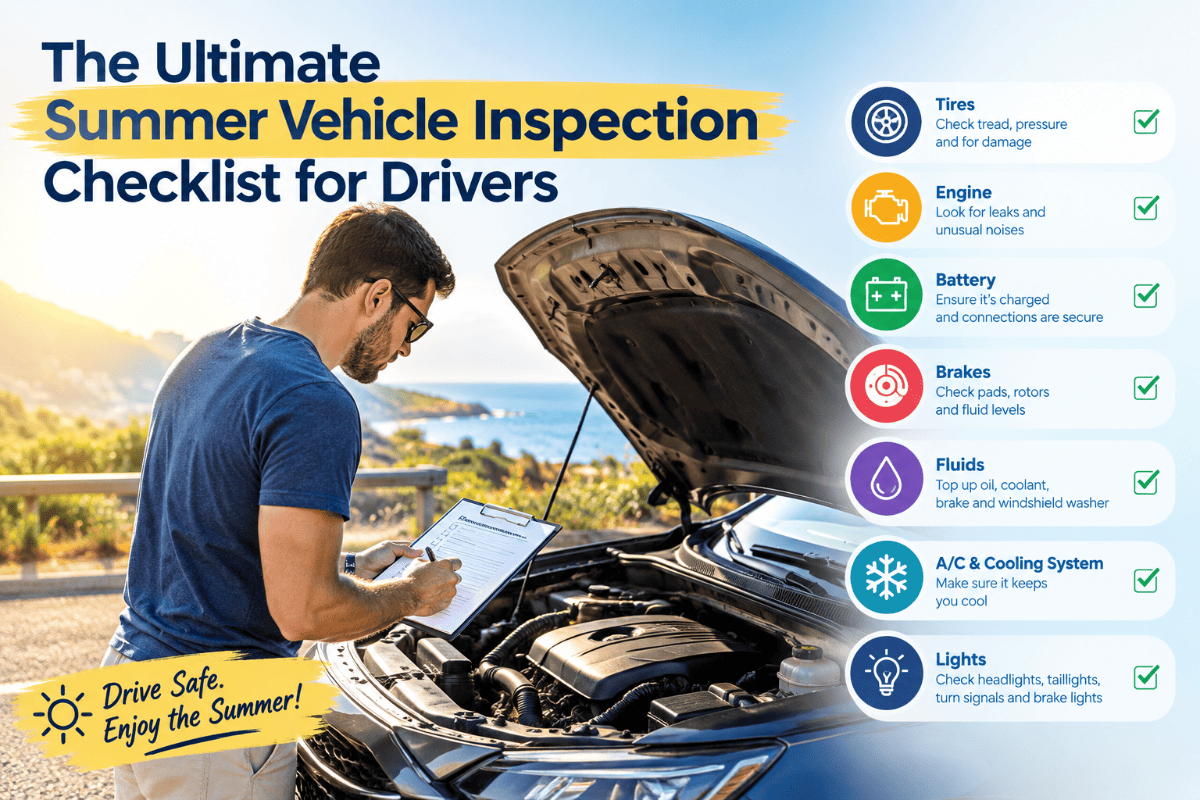
Summer brings long drives, family trips, and more time on the road. However, rising temperatures put extra stress on your car’s engine, tires, battery, brakes, and air conditioning system. A small issue you miss in spring could turn into a breakdown on a hot afternoon. A thorough summer vehicle inspection checklist helps you spot trouble early and prepare your car for the heat.
At 616 Auto Repair, we believe safe summer driving starts with a well-maintained vehicle. Our team helps drivers check key parts, address repair needs, and keep their cars ready for daily commutes and road trips. With a few simple checks and professional care, you head into summer with greater confidence and fewer surprises.
Hot weather affects more than your car’s cabin temperature. Heat speeds up fluid loss, adds stress to the cooling system, and raises tire pressure as the air inside the tires warms up. Long trips and heavy traffic also place extra demands on the engine and brakes.
A summer inspection helps you find worn parts, fluid leaks, weak batteries, and cooling problems before they lead to bigger repairs. It also lets you check safety features before driving with family or on long trips.
Read More :- What Are The Most Common Signs Of A Transmission Fluid Leak?
1. Check Your Tires and Tire Pressure
Your tires keep your car connected to the road. Hot pavement, long drives, and incorrect pressure increase the risk of tire wear and damage.
Use these steps to check tire health:
If your steering wheel shakes or the car pulls to one side, ask a mechanic to check the wheel balance, alignment, and suspension.
2. Inspect Engine Oil and Other Fluids
Fluids help your car control heat, reduce friction, and keep key parts working. Low or dirty fluids put extra strain on the engine and other systems.
| Fluid | What to Check | Why It Matters |
| Engine oil | Level, color, and service date | Protects moving engine parts |
| Coolant | Level, leaks, and condition | Helps control engine heat |
| Brake fluid | Level and signs of leaks | Supports safe braking |
| Transmission fluid | Level and condition, where applicable | Helps the transmission work as designed |
| Windshield washer fluid | Level and spray function | Keeps the windshield clear |
Check fluids according to the owner’s manual and follow the correct steps for your vehicle. Never open a hot radiator or coolant reservoir under pressure. Let the engine cool before checking the cooling system.
3. Book a Professional Engine Inspection
A quick look under the hood helps, but some engine problems need special tools to find. Our car engine inspection service focuses on warning signs such as oil leaks, damaged belts, worn hoses, unusual sounds, and warning lights.
We also check the battery connections, air filter, and other parts that affect engine performance. If the check engine light stays on, a diagnostic scan helps us find stored fault codes and decide which tests to perform next.
Fixing a small leak or worn part early helps reduce the risk of a breakdown during a long drive. If the engine runs rough, loses power, or shows signs of overheating, schedule an inspection before you head out.
4. How Do You Prevent Engine Overheating in Summer?
Engine overheating is a serious concern during hot weather, especially in slow traffic or on long climbs. A damaged hose, low coolant, a faulty thermostat, or a failing cooling fan can all cause excess heat.
Our engine overheating prevention checks focus on the parts that help keep temperatures under control. We inspect the radiator, coolant hoses, fan operation, thermostat, and signs of leaks.
Radiator inspection and maintenance help us spot blocked cooling fins, leaks, damaged hoses, and other issues that affect heat flow. If a fault needs more work, engine cooling system repair addresses the cause, not just the symptoms.
If your temperature gauge enters the red zone or a warning light appears, pull over somewhere safe, turn off the engine, and let it cool. Do not remove the radiator cap while the system is hot. Arrange professional help if the warning continues.
5. Test Your Battery and Electrical System
Summer heat speeds up battery wear and affects the fluid inside some battery types. A weak battery may struggle to start the engine, even if it worked well during cooler weather.
Look for corrosion around battery terminals, loose connections, cracked cases, and signs of swelling. Also, pay attention to slow engine cranking or dim lights. A battery test checks its charge and starting strength, while a charging system test helps reveal alternator problems.
If your battery is several years old, a professional test gives you a clearer picture of its condition before a long trip.
6. Is Your Air Conditioning Ready for Summer?
A working air conditioner keeps the cabin comfortable and helps reduce driver fatigue during hot weather. If the vents blow warm air, airflow feels weak, or the system makes strange sounds, book car AC service before the hottest days arrive.
During an inspection, we check cooling performance, cabin air filters, visible leaks, and key system parts. We also test refrigerant levels and pressure. Simply adding refrigerant without finding a leak leaves the root problem unresolved.
7. Check Your Brakes, Lights, and Wipers
Safe driving depends on more than engine health. Brakes, lights, and wipers help you respond to traffic, sudden stops, rain, and poor visibility.
Schedule an auto brake inspection if you hear grinding or squealing, feel vibration while braking, or notice the pedal feels soft. A mechanic checks the pads, rotors, fluid, and other parts based on the vehicle’s needs.
Before a trip, also inspect the following:
These checks take little time but help you stay ready for changing road conditions.
8. How Often Should You Inspect Your Car During Summer?
The answer depends on your mileage, vehicle age, driving conditions, and the manufacturer’s service plan. Use the schedule below as a practical guide.
| Inspection Task | Suggested Timing |
| Tire pressure | Monthly and before long trips |
| Engine oil and fluid levels | Monthly and before long trips |
| Lights and wipers | Monthly |
| Battery condition | Before summer trips and during routine service |
| Brakes and cooling system | During scheduled service or when warning signs appear |
| Full vehicle inspection | Before a major road trip |
Drivers who travel long distances, carry heavy loads, or drive in stop-and-go traffic should pay closer attention to tire wear, fluid levels, and cooling performance. Follow the owner’s manual for service intervals and replace parts based on their condition.
A little preparation goes a long way when temperatures rise. Checking tires, fluids, brakes, battery health, and cooling performance helps protect your vehicle and keeps your summer travel plans on track.
At 616 Auto Repair, we help drivers identify problems, plan needed repairs, and prepare their vehicles for the demands of summer driving. Our team is here to inspect your car and explain the work it needs in clear, simple terms.
Contact 616 Auto Repair today to schedule your summer vehicle inspection. Start the season with a car you feel confident driving, whether you’re heading to work or setting off on a road trip.
A summer inspection should cover tire pressure and tread, engine oil, coolant, battery health, brakes, lights, wipers, and air conditioning. It should also include a check for fluid leaks, worn belts, damaged hoses, and warning lights.
Check tire pressure and fluid levels at least monthly and before long trips. Inspect the battery during routine service and before demanding travel. Follow the owner’s manual for fluid changes and arrange testing if warning signs appear.
Keep coolant at the correct level, inspect hoses for leaks, and maintain the radiator and cooling fan. Watch the temperature gauge while driving. If the engine overheats, stop safely, switch it off, and let it cool.
Check tires, brakes, engine oil, coolant, battery health, lights, wipers, and air conditioning. Also, pack a spare tire, jack, basic emergency supplies, and water. Arrange a professional inspection if your car shows signs of trouble.
Summer maintenance helps reduce the risk of tire failure, engine overheating, brake trouble, and sudden breakdowns. It also supports clear visibility and cabin comfort. Regular checks help drivers address safety concerns before starting a long journey.