- Bays Available Today
- Bays Available Today
- Bays Available Today
- Bays Available Today
- Bays Available Today
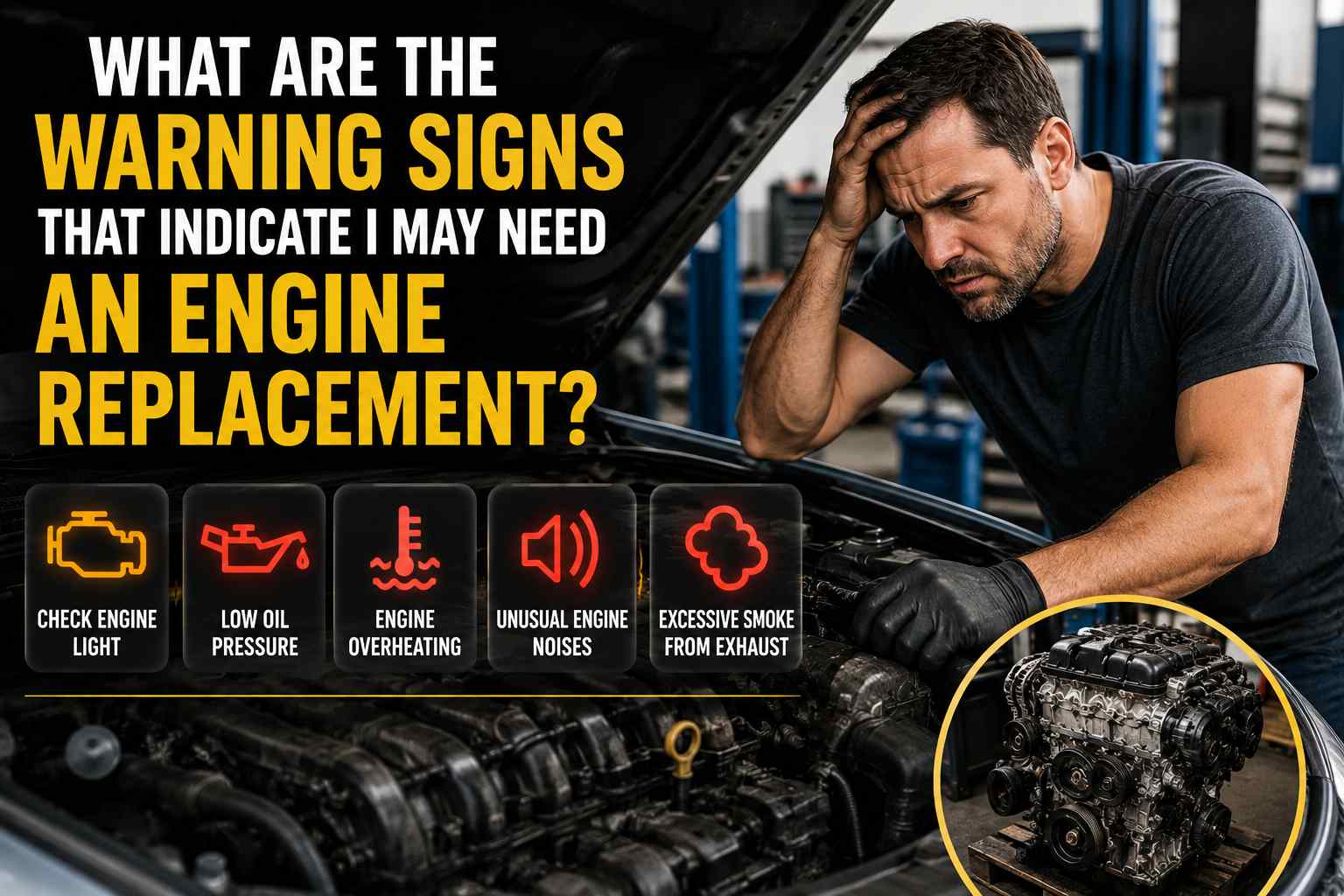
An engine replacement may become necessary when an engine has severe internal damage that cannot be repaired economically. Warning signs you need an engine replacement can include persistent knocking, severe oil consumption, repeated overheating, low compression, metal contamination in the oil, excessive smoke, and significant power loss.
However, these symptoms do not automatically mean the entire engine must be replaced. Some problems can be corrected with a component-level repair, while others may make an engine rebuild practical. A proper diagnosis is the first step in determining which option is appropriate.
Several symptoms can indicate that an engine has developed a significant mechanical problem. One symptom by itself may not justify replacement, but multiple symptoms occurring together deserve prompt attention.
Common signs include:
The severity, frequency, and combination of these symptoms are important. A technician needs to determine whether the underlying problem involves a repairable component or extensive internal engine damage.
Recent Blog: What Is The Difference Between An Engine Replacement And An Engine Rebuild
Unusual engine noises can provide important clues about mechanical problems. However, the sound itself cannot confirm that an engine needs replacement because several different problems can produce similar noises.
A deep, rhythmic knocking sound that becomes louder as engine speed increases can be associated with internal bearing or crankshaft problems. Inadequate lubrication and low oil pressure can also contribute to internal damage.
If a knocking sound becomes more pronounced during acceleration, the vehicle should be inspected rather than operated normally until the cause is identified.
Grinding may indicate that mechanical components are making abnormal contact. If the source is inside the engine, continued operation can increase component damage.
Grinding combined with low oil pressure, metal in the oil, or significant power loss is particularly concerning.
Rattling and ticking can have many causes, including timing components, valve-train components, loose parts, exhaust components, or lubrication problems.
Because the possible causes range from relatively minor to severe, identifying the location and operating conditions of the noise is more useful than assuming the engine needs replacement.
Exhaust smoke and changes in fluid condition can provide additional clues about engine health.
Blue exhaust smoke generally indicates that engine oil is being burned inside the combustion chamber. Possible causes include worn piston rings, cylinder walls, or valve seals.
Excessive oil burning combined with low compression or other internal wear can indicate a more extensive engine problem.
Persistent white exhaust smoke accompanied by unexplained coolant loss can indicate that coolant is entering the combustion chamber.
A failed head gasket, damaged cylinder head, or cracked engine block can cause this condition. Testing is necessary to determine which component is responsible.
Black exhaust smoke generally indicates that the engine is receiving too much fuel relative to the available air. Fuel-system problems, sensors, or air-intake restrictions can contribute to this condition.
Black smoke by itself is not proof of internal engine failure and may be repairable without replacing the engine.
Oil underneath a vehicle can result from a leaking gasket, seal, oil pan, filter, or another component.
A leak becomes particularly serious when it causes the engine to operate with insufficient oil. Inadequate lubrication can damage bearings, crankshaft surfaces, and other internal components.
Milky or unusually cloudy oil can indicate coolant contamination, although condensation can sometimes create a similar appearance.
If coolant and engine oil are mixing, further inspection is necessary to determine whether the cause is a head gasket, cylinder head, engine block, or another issue.
Changes in engine performance can sometimes reveal problems that are not immediately visible.
A significant and persistent loss of power can result from compression problems, ignition faults, fuel-delivery issues, exhaust restrictions, or internal engine damage.
If testing shows that multiple cylinders have poor compression because of severe internal wear, rebuilding or replacing the engine may need to be considered.
A sudden increase in oil consumption can indicate worn piston rings, cylinder walls, valve seals, or other internal components.
The amount of oil being consumed and the underlying cause are more important than simply observing that the engine uses oil.
Repeated overheating should never be treated as a problem that can be solved simply by adding coolant.
Potential causes include coolant leaks, thermostat problems, radiator restrictions, water-pump failure, cooling-fan problems, or other cooling-system faults.
Severe or repeated overheating can eventually damage the cylinder head, head gasket, or engine block.
How do I know if my engine needs replacing is a question that requires more than checking the vehicle’s symptoms.
A technician needs to establish:
Depending on the symptoms, testing may include compression testing, leak-down testing, oil-pressure testing, diagnostic scanning, cooling-system testing, and inspection of the engine oil.
Low compression, for example, does not automatically mean an engine needs replacement. A valve problem, head-gasket failure, worn piston rings, or cylinder damage can all affect compression.
When should you replace your engine depends on the severity of the damage and the overall condition and value of the vehicle.
Replacement may become appropriate when:
Vehicle mileage and age also matter. An engine replacement may be reasonable for a vehicle that is otherwise mechanically sound. On an older vehicle with transmission, suspension, electrical, or other major problems, the total repair investment should be evaluated more carefully.
Can you drive with a failing engine depends on the nature and severity of the problem, but continued driving can increase the risk of additional damage.
Avoid normal driving when the vehicle has severe knocking, very low oil pressure, persistent overheating, substantial power loss, or another symptom suggesting serious mechanical failure.
If the oil-pressure warning light comes on, the engine overheats severely, or a major mechanical noise suddenly develops, safely stopping the vehicle and arranging an inspection can help prevent further damage.
Professional engine diagnostics should be completed before deciding that an engine requires replacement.
A diagnostic scan can identify stored fault codes and operating abnormalities, but a trouble code does not necessarily identify the failed mechanical component. Mechanical testing is often needed to determine the actual cause.
Depending on the symptoms, a thorough diagnostic process may include:
The objective is to identify the root cause and determine whether the engine can be repaired, rebuilt, or should be replaced.
Not every serious engine symptom requires a complete replacement. Some failures originate from individual components that can be repaired without replacing the entire engine.
For example, a failed ignition component, sensor, thermostat, water pump, gasket, fuel-system component, or other external part may create symptoms that initially appear to indicate engine failure.
Even some internal engine problems can be addressed through component-level repairs when the block and major components remain serviceable.
This is why diagnosis is important before approving major engine work.
An engine rebuild may be considered when the existing engine has internal wear but its major structural components remain suitable for restoration.
During a rebuild, the engine is disassembled and its components are cleaned, measured, and inspected. Components outside acceptable specifications may be replaced, while reusable parts may require machining.
The condition of the engine block, cylinder walls, crankshaft, cylinder heads, pistons, and other components determines whether rebuilding is practical.
A rebuild is therefore not simply a less expensive alternative to replacement. It is a different repair approach that depends heavily on the condition of the existing engine.
An engine replacement service involves removing the failed engine and installing another engine that meets the vehicle’s specifications.
The process can include:
The exact procedure varies according to the vehicle and engine design.
Engine replacement cost varies widely because the total expense depends on more than the price of the replacement engine.
Important cost factors include:
A used engine may have a lower purchase price, but its mileage and maintenance history may be less certain. A remanufactured engine may cost more but provide different warranty coverage.
For that reason, compare the complete installed cost and warranty, rather than comparing engine prices alone.
Must Read: How to Fix a Car’s Engine Knocking When Accelerating
Regular auto engine repair and maintenance can help identify developing problems before they become major failures.
Oil leaks, unusual noises, cooling-system problems, warning lights, changes in oil pressure, and unexplained performance changes should be investigated promptly.
Routine maintenance cannot prevent every engine failure, but identifying lubrication, cooling, ignition, or other problems early can reduce the likelihood of secondary damage.
Maintenance records are also valuable because they provide information about oil changes, cooling-system repairs, previous engine work, and other factors that can help explain an engine’s condition.
Professional engine repair services should begin with diagnosis rather than assuming that every major engine problem requires replacement.
The repair process should establish the cause of failure, determine which components are affected, and assess whether those components can be repaired or restored.
The results can then be used to compare three potential paths:
This approach helps prevent unnecessary engine replacement while also avoiding repairs that are unlikely to provide a reliable long-term result.
Must Read: How to Diagnose Engine Misfires When the Check Engine Light Turns On
A major engine decision should follow a logical process:
Identify the symptoms → diagnose the cause → determine the extent of damage → assess repairability → calculate the total repair cost → compare rebuild and replacement options → consider vehicle value and future use.
Before approving an engine replacement, ask:
These questions provide a much stronger basis for decision-making than choosing an option solely because it has the lowest initial price.
The warning signs you need an engine replacement can include persistent knocking, severe oil consumption, repeated overheating, low compression, metal contamination, excessive smoke, and major power loss. However, these symptoms do not automatically mean that the entire engine has to be replaced.
The key is to determine why the engine is failing and how much of the engine can still be repaired or restored. Some problems require only component-level repairs. Others may be suitable for rebuilding, while severe structural damage may make replacement the more practical option.
A systematic diagnosis followed by a comparison of repair cost, rebuild cost, replacement options, warranty, vehicle condition, and long-term ownership plans provides the most reliable way to make the decision.
For a vehicle experiencing persistent engine symptoms, addressing the problem early is generally preferable to continuing to drive until a repairable fault develops into extensive internal damage.
Knocking noises, smoke from the exhaust, constant overheating, and heavy oil use are the biggest red flags. These engine replacement warning signs often show up together once internal damage starts spreading.
Driving a failing engine is risky and can turn a small issue into total failure fast. If you notice smoke or overheating, get it inspected instead of pushing through the symptoms.
Mechanics run professional engine diagnostics, checking compression, oil condition, and internal leaks. They weigh repair costs against the car’s value before recommending a fix or a full swap.
Yes, repeated overheating warps cylinder heads and cracks blocks over time. Once that damage sets in, a proper engine replacement service is often the only reliable long-term fix available.
Cost varies by vehicle and engine type, but it often beats paying for repeated repairs through trusted engine repair services. For most drivers, it’s a smart long-term investment.