- Bays Available Today
- Bays Available Today
- Bays Available Today
- Bays Available Today
- Bays Available Today
Your transmission cooling line does a tough job every single day. It shuttles hot fluid out to the radiator and brings cooled fluid back, keeping your gears shifting smoothly and your transmission from cooking itself. Over time, heat, rust, and wear take a toll on this line, and a small crack can turn into a serious leak fast. Left unchecked, a failing line drains fluid quietly until your transmission starts slipping or overheating. Understanding a transmission cooling line leak early keeps small issues from becoming expensive headaches down the road.
Before diving into causes, it helps to know what this line actually does. Fluid leaves the transmission hot, travels through the line to the radiator, cools down, then heads back to keep everything running smoothly.
This constant loop protects your transmission from overheating during stop-and-go traffic, towing, or long highway drives. Metal or rubber sections connect at fittings near the transmission and radiator, and any weak point along the way can turn into a leak source. Once you understand this flow, spotting a problem gets a lot easier.
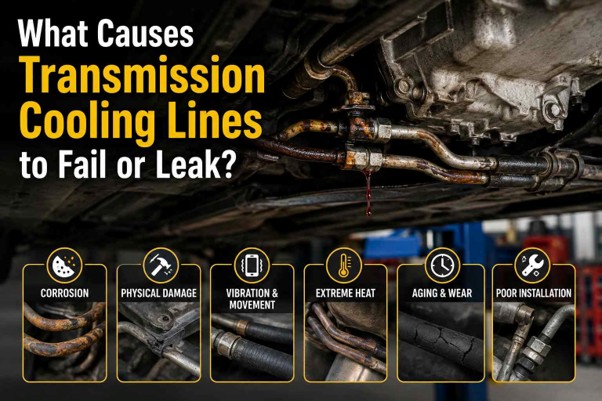
Several factors chip away at cooling lines over the years. Knowing these common causes of transmission cooling line leaks helps you catch trouble before it spreads.
Read More :- Walker, MI Drivers: Prepare Your Vehicle for Summer Travel
The main factors usually involve age, exposure, or damage. Metal lines are located on the underside of your vehicle, where they endure harsh conditions from road salt, gravel, and moisture every time you drive. Rubber sections dry out over the years, losing their seal around fittings. Add in normal engine heat and constant pressure, and it’s no wonder these lines eventually give out. Regular inspections catch this wear before it turns into a full leak.
Corrosion and Rust: A Leading Culprit
Rust doesn’t happen overnight, but it’s one of the most common reasons lines fail. Understanding how corrosion builds helps drivers catch it early.
How Corrosion Builds Up
Metal lines exposed to road salt during winter months corrode faster than lines in drier climates. Moisture sits on the metal surface, reacting over time and eating through the protective coating.
Where Corrosion Hits Hardest
Corrosion tends to attack bends, fittings, and low points where moisture collects and doesn’t dry out quickly. These weak spots often develop pinholes long before a visible crack appears.
Why Early Detection Matters
Catching rust early, before it eats through the metal completely, means a simple line repair instead of a full replacement. Regular underbody inspections make a real difference here.
A transmission cooling line leak near radiator connections is fairly common, since this area deals with constant vibration and heat cycling. Fittings here loosen gradually, and rubber gaskets wear thin faster than the metal sections. Fluid dripping near the radiator often looks like a coolant leak at first glance, which confuses a lot of drivers. Getting a proper inspection helps tell the difference and points you toward the right fix instead of guessing.
Prevention beats repair every time. A few simple habits go a long way toward keeping your cooling lines in good shape.
Following these steps keeps your system running longer and prevents unexpected breakdowns.
Proper diagnosis takes the guesswork out of fixing a leak. Our shop runs complete transmission diagnostics to find the exact source before recommending any repair.
Technicians start with a visual inspection, checking lines, fittings, and connection points for cracks or rust. From there, pressure testing and dye kits trace fluid back to its precise origin. This thorough approach means you get an accurate answer instead of a rough guess, and it stops the same leak from popping up again a few months later.
Once we find the leak, our team explains your repair options clearly before starting any work.
For minor damage, a car transmission cooling line repair patches the affected section without touching the rest of the line. Heavily corroded or damaged sections need full replacement to prevent repeat leaks down the road. Loose fittings get tightened or swapped out, and any rubber sections showing wear get replaced with fresh parts built to handle heat and pressure.
Repair costs vary depending on the extent of the damage and your vehicle type. A minor transmission cooling line repair cost stays fairly low when caught early, since it often only involves a patch or fitting swap. Full line replacement runs higher, especially on vehicles where the line is harder to access. Getting an accurate quote after inspection helps you plan instead of guessing at the final bill.
Not every leak calls for a major repair, but every leak deserves a proper look from trained hands. Our auto transmission repair services cover everything from small line patches to complete replacements, backed by ASE-certified technicians. We also handle full transmission fluid leak repair when fluid loss has affected other parts of the system, giving you one trusted shop for the whole job.
Don’t let a small drip turn into a major transmission problem. Bring your vehicle to 616 Auto Repair in Grand Rapids, MI, and let our friendly, skilled team take a close look. Our dedicated, personalized client services and experienced technicians are ready to track down the issue and get you back on the road with confidence. Schedule your appointment today.
Rust, corrosion, worn fittings, physical damage, and old rubber sections all cause failure over time. Heat exposure and high mileage speed up wear, making regular inspections important for catching problems early.
Leaks happen when metal corrodes, fittings loosen, or rubber sections dry out and crack. Road salt, moisture, and constant vibration all contribute to gradual wear that eventually breaks the seal.
Yes, corrosion is one of the leading causes of line failure. Rust eats through metal from the outside in, creating pinholes and cracks that lead to fluid loss over time.
Technicians perform visual inspections, checking lines and fittings for damage. Pressure tests and dye kits help trace fluid back to its exact source, giving an accurate diagnosis before repairs begin.
Driving with a leak isn’t safe long-term. Low fluid causes overheating and increased wear on internal parts. Get it inspected quickly to avoid costly, lasting transmission damage.
Cost depends on damage extent, vehicle type, and line accessibility. Minor repairs cost less than full replacements. Your technician provides an accurate estimate after a thorough inspection.
Most lines last several years under normal conditions, but road salt, high mileage, and heat exposure shorten their lifespan. Regular inspections help catch wear before a full failure happens.