- Bays Available Today
- Bays Available Today
- Bays Available Today
- Bays Available Today
- Bays Available Today
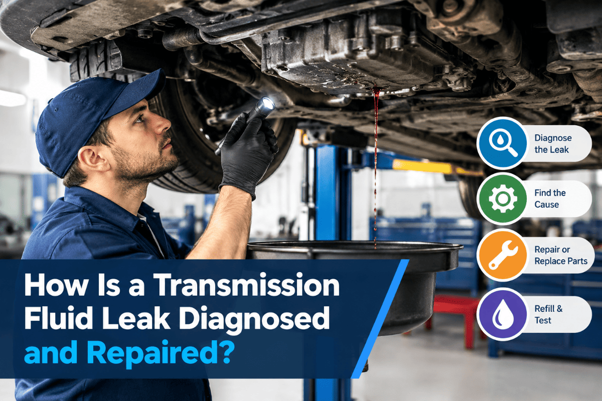
A transmission fluid leak is more than a messy spot under your car. It puts your vehicle’s gears, moving parts, and overall performance at risk. Low fluid levels increase friction and heat, which leads to rough shifting and costly damage if left unchecked. Spotting the leak early helps protect your transmission and keeps your car safe on the road.
At 616 Auto Repair, we help drivers understand what causes transmission fluid leaks and how to fix them. Our transmission fluid leak diagnosis and repair process focuses on finding the source, checking the condition of the transmission, and choosing the right repair. With a clear plan, you’ll better understand what your vehicle needs and how to prevent the issue from returning.
Transmission fluid helps lubricate moving parts, control heat, and support smooth gear changes. When fluid escapes, the transmission struggles to do its job. Watch for these warning signs:
Red or brown fluid under the car
Fresh automatic transmission fluid often looks red or pink. Older fluid turns brown as it ages. Fluid color alone does not confirm the source, so a mechanic needs to inspect the leak.
Rough or delayed gear shifts
Low fluid pressure affects gear changes. You may notice a delay when shifting from Park to Drive or feel a sudden jerk while moving.
Burning smell
Low fluid levels and excess heat raise the risk of a burnt smell. Stop driving if the odor comes with smoke or severe shifting trouble.
Slipping gears
The engine revs, but the car does not pick up speed as expected. This points to a serious transmission concern.
Unusual transmission noise
Whining, humming, or grinding sounds deserve prompt attention, especially when they appear with fluid loss.
These signs do not always point to a leak. A proper inspection helps separate fluid loss from other transmission faults.
Read More :- What Are the Warning Signs That Indicate I May Need an Engine Replacement?
Finding the exact source matters. Simply adding fluid does not fix a damaged seal, loose fitting, or cracked housing. Our inspection process follows a step-by-step approach to help identify the problem.
1. Check the Fluid Level and Condition
We start by checking the fluid level using the vehicle manufacturer’s procedure. Some vehicles have a dipstick, while others require a specific temperature and service process to check the level. We also inspect the fluid for a burnt smell, dark color, or signs of contamination.
2. Inspect the Transmission and Nearby Parts
Next, we look for wet spots around the transmission pan, drain plug, seals, cooler lines, fittings, and axle seals. Fluid can travel along the underside of the vehicle, so the place where it drips onto the ground does not always show the true source.
3. Clean the Area and Trace the Leak
If the source remains unclear, we clean the affected area and run the vehicle under safe test conditions. Fresh fluid then helps reveal where the leak starts. Depending on the vehicle, a mechanic also uses a suitable leak-detection dye.
4. Check for Related Damage
We assess the transmission for signs of low fluid pressure, overheating, or shifting trouble. If the car shows transmission overheating symptoms, such as a warning light, burning odor, or abnormal shifting, further testing helps determine whether the leak has harmed internal parts.
The repair depends on the source, the vehicle design, and the condition of the transmission. After diagnosis, we explain the required work and recommend a suitable fix.
Common repairs include:
A simple seal replacement differs from a leak caused by a damaged transmission housing or internal failure. We inspect the full system before deciding on the repair.
Routine care helps keep the transmission in good shape. Follow these practical steps to reduce the risk of future trouble.
Check for warning signs
Look for fresh fluid spots beneath your parked vehicle. Pay attention to changes in shifting, new sounds, or a burning smell.
Follow the service schedule
An automatic transmission fluid change helps maintain fluid quality when performed at the interval set by the vehicle maker. Some vehicles also require filter replacement during service.
Address small problems early
A loose fitting or worn seal needs attention before fluid loss leads to excess heat or poor lubrication. Avoid driving with a serious leak while waiting for an appointment.
Use the correct fluid
Different transmissions require specific fluid types. Using the wrong product or filling the system to the wrong level affects performance and raises the risk of damage.
A small leak deserves prompt attention before it turns into a major repair. At 616 Auto Repair, we inspect the transmission, trace the source of fluid loss, and explain the repair options in clear terms. Our goal is to help you protect your vehicle and get back on the road with confidence.
If you notice fluid beneath your car, rough gear changes, or a burning smell, contact our team to schedule an inspection. Searching for the nearest auto transmission repair shop? Choose 616 Auto Repair for professional care and a clear plan to address your transmission concerns. Reach out today to book your service appointment.
Common signs include red or brown fluid under the car, delayed gear shifts, slipping gears, a burning smell, and unusual transmission noises. Check these symptoms promptly to reduce the risk of further damage.
Mechanics check fluid levels and condition, inspect seals and gaskets, and examine cooler lines and fittings. They also clean the affected area and trace fresh fluid to identify the exact source before recommending repairs.
Driving with a transmission fluid leak risks low fluid pressure, overheating, and serious internal damage. If the leak is active or shifting changes, stop in a safe place and arrange professional help rather than continuing to drive.
The cost depends on the leak’s location, vehicle model, parts, and labor. A simple gasket repair costs less than replacing hard-to-reach seals or damaged lines. An inspection provides a more accurate estimate.
Common causes include worn seals, damaged pan gaskets, loose drain plugs, cracked cooler lines, faulty fittings, and damaged transmission housings. Age, heat, road debris, and poor past repairs also contribute to fluid loss.