- Bays Available Today
- Bays Available Today
- Bays Available Today
- Bays Available Today
- Bays Available Today
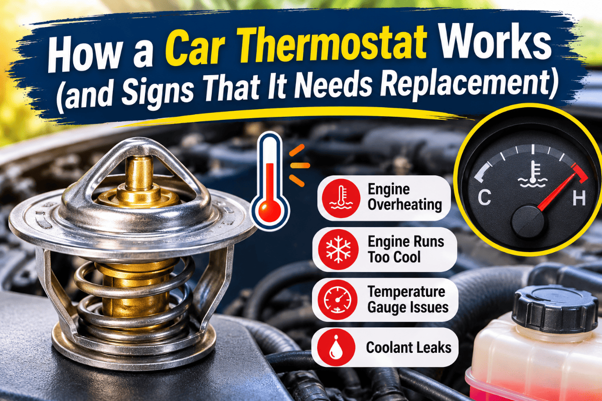
Your car’s engine produces a lot of heat while it runs. It needs the right temperature to work well, protect its parts, and deliver steady performance. A small part called the thermostat plays a big role in keeping this heat under control. It controls the flow of coolant through the engine and helps prevent sudden temperature changes.
Understanding how a car thermostat works gives you a better idea of why this part matters and when it needs attention. At 616 Auto Repair, we help drivers understand cooling system issues and keep their vehicles running at the right temperature.
A car thermostat is a small valve inside the engine’s cooling system. Its main job is to control when coolant flows from the engine to the radiator. The engine needs enough heat to run well, but too much heat puts stress on its parts. The thermostat helps maintain a safe working temperature.
When you start a cold engine, the thermostat stays closed. This keeps coolant inside the engine instead of sending it to the radiator. As the engine warms up, the thermostat opens and allows coolant to flow through the radiator. The radiator then releases heat into the air before the coolant returns to the engine.
This cycle keeps engine temperature within the range set by the vehicle maker. It also helps the engine reach its working temperature sooner, supports fuel use, and allows the cabin heater to produce warm air.
Understanding the parts and steps behind how does a thermostat regulate engine coolant temperature makes it easier to spot a problem.
Most car thermostats use a small heat-sensitive part filled with wax. This part expands as the engine heats up. The expansion pushes a small rod, which opens the valve and allows coolant to move toward the radiator.
Here is how the process works:
1. The Engine Starts Cold
When you start your car, the engine and coolant are still cool. The thermostat stays closed, so coolant moves within the engine through a smaller path. This helps the engine warm up faster and reach its set operating temperature.
2. The Engine Reaches Its Working Temperature
As the engine heats the coolant, the wax inside the thermostat expands. This movement pushes the valve open. Hot coolant then travels from the engine to the radiator through the upper radiator hose.
3. The Radiator Cools the Hot Coolant
The radiator has a network of small tubes and fins. Air moves through these parts and carries heat away from the coolant. The water pump then moves the cooled fluid back through the engine.
4. The Thermostat Adjusts Coolant Flow
The thermostat responds to changes in coolant temperature. As the coolant cools, the valve moves toward the closed position. When the engine heats up again, the valve opens to allow more coolant to reach the radiator.
This cycle repeats as you drive. It keeps the engine within its designed temperature range during city trips, highway drives, and long journeys.
Read More :- Transmission Rebuild vs. Replacement: Which Option Is Best for Your Vehicle?
A faulty thermostat affects the way coolant moves through the engine. It can get stuck in the open or closed position. Each issue creates different symptoms, so paying attention to changes in your car helps you catch trouble early.
Here are the main failing car thermostat signs every driver should know.
1. The Engine Overheats
An engine that runs hotter than its normal range is a key warning sign. A thermostat stuck closed blocks coolant from reaching the radiator. Heat builds up inside the engine, and the temperature gauge rises.
If the gauge enters the red zone, pull over in a safe place, turn off the engine, and let it cool. Never remove the radiator cap while the engine remains hot. The cooling system holds hot fluid under pressure, which can cause serious burns.
2. The Engine Takes Too Long to Warm Up
A thermostat stuck open allows coolant to flow through the radiator even when the engine is cold. As a result, the engine takes longer to reach its working temperature.
You might notice the temperature gauge stays near the cold mark during a normal drive. The engine also takes longer to provide cabin heat. A mechanic should check the thermostat and coolant system to find the cause.
3. The Temperature Gauge Keeps Changing
A healthy cooling system keeps engine temperature within a steady range. However, a faulty thermostat can cause the temperature gauge to move up and down during a drive.
For example, the gauge might rise as you drive through traffic and drop when you reach an open road. These changes point to engine temperature problems that need a proper inspection.
4. The Cabin Heater Produces Weak Heat
Your car’s heater uses heat from the engine coolant to warm the cabin. If the thermostat stays open, the engine struggles to reach its normal working temperature. As a result, the heater takes longer to produce warm air or blows air that feels less warm than usual.
5. Coolant Leaks or Poor Coolant Flow
A faulty thermostat can affect coolant flow and increase pressure or heat in parts of the cooling system. You might notice coolant near the thermostat housing or signs of a leak around nearby hoses.
However, leaks also come from damaged hoses, loose clamps, or other cooling system parts. A proper check helps find the exact source.
The effect depends on how the thermostat fails.
A thermostat stuck closed prevents hot coolant from reaching the radiator. The engine keeps producing heat, but the cooling system loses an important way to remove it. Continued overheating puts stress on the cylinder head, head gasket, and other engine parts.
On the other hand, a thermostat stuck open sends coolant to the radiator too soon. The engine takes longer to warm up and struggles to maintain its working temperature. This affects cabin heat, fuel use, and engine performance.
Both issues call for a proper inspection. At 616 Auto Repair, we check the thermostat, coolant level, radiator, hoses, and water pump to understand what affects the cooling system.
A proper diagnosis helps confirm whether the thermostat needs replacement or another cooling system part needs attention.
At 616 Auto Repair, the inspection process focuses on finding the source of the temperature issue. A mechanic checks the temperature gauge readings, coolant level, thermostat housing, and cooling system condition. The mechanic also checks for leaks and reviews how the engine warms up.
If the thermostat needs replacement, the repair process generally includes these steps:
A quality car thermostat replacement also requires the right part for the vehicle’s make, model, and engine type. Using the correct thermostat helps the cooling system follow the temperature range set by the manufacturer.
Regular cooling system care supports steady engine performance and helps you catch small issues before they affect other parts. The thermostat works with several components, so checking the full system gives a clearer picture of its condition.
Follow these simple maintenance steps:
A professional cooling system repair service also checks the radiator, water pump, cooling fan, hoses, and thermostat. These parts work together to control engine heat and keep coolant moving.
Your car’s thermostat is small, but its job matters every time you start the engine. From controlling coolant flow to supporting cabin heat, this part helps protect your engine and maintain steady performance. A quick response to unusual temperature readings also helps protect other cooling system parts.
At 616 Auto Repair, we take the time to inspect your vehicle, explain the cause of the problem, and recommend the right repair. If your temperature gauge keeps changing, your heater blows cool air, or your engine takes too long to warm up, let our auto repair professionals check the cooling system.
Schedule an inspection with 616 Auto Repair today and let our experts take care of your car’s cooling system before a small thermostat issue turns into a major engine repair.
A car thermostat controls coolant flow based on engine temperature. It stays closed while the engine warms up and opens when the coolant reaches its set temperature, allowing hot fluid to flow through the radiator.
Common signs include engine overheating, slow warm-up, changing temperature gauge readings, weak cabin heat, and coolant leaks near the thermostat housing. A mechanic checks these symptoms to confirm the cause.
Yes. A thermostat stuck open keeps the engine cooler than its normal working temperature. As a result, the heater takes longer to warm the cabin and produces less heat during winter drives.
Most vehicle makers do not set one fixed replacement interval for every thermostat. Its service life depends on the vehicle, part quality, and cooling system condition. Follow your owner’s manual and inspection results.
Most thermostat replacements take around one to two hours. However, the time depends on the vehicle’s design, thermostat location, coolant access, and any extra cooling system checks or repairs.