- Bays Available Today
- Bays Available Today
- Bays Available Today
- Bays Available Today
- Bays Available Today
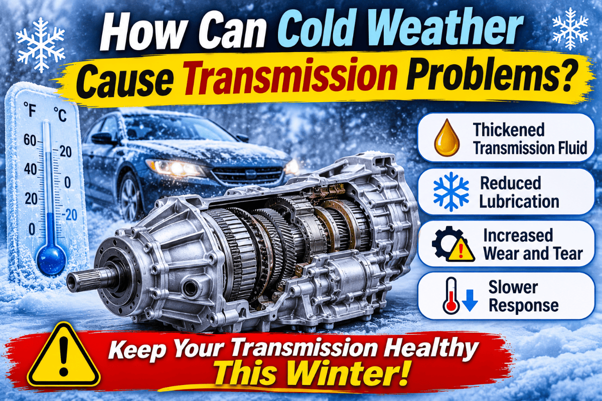
Cold weather affects how a vehicle’s transmission works. Low temperatures thicken transmission fluid, slow its movement, and make gear changes harder. These conditions contribute to winter transmission problems, especially during cold starts. Drivers may notice delayed gear engagement, hard shifting, slipping gears, unusual noises, or dashboard warning lights. Some changes improve as the vehicle warms up.
However, repeated or severe symptoms point to possible fluid, electrical, or mechanical faults. Regular fluid checks, gentle driving, and proper warm-up habits help protect the transmission. If problems continue, professional diagnostics from 616 Auto Repair in Grand Rapids, Michigan, can help identify the cause and determine the right repair.
How Cold Weather Affects Transmission Performance
Cold-weather transmission problems occur when low temperatures affect fluid thickness, component movement, and gear shifting. Transmission fluid flows more slowly when cold, which affects lubrication and hydraulic operation. As the vehicle warms up, fluid movement improves. However, the level of change depends on the vehicle, transmission type, fluid condition, and outside temperature.
Why Do Low Temperatures Cause Transmission Problems?
Transmission fluid becomes thicker in cold conditions. As a result, it takes more time to circulate through the system. Automatic transmissions need proper fluid pressure to engage gears and shift smoothly.
Low temperatures also affect seals, sensors, and other parts. Old, dirty, or incorrect fluid adds to the problem. Existing wear inside the transmission also becomes easier to notice during winter.
Common Transmission Problems During Cold Weather
Drivers should watch for these warning signs:
Read More :- What Is an Engine Overhaul, and When Does Your Car Need One?
Drivers protect their vehicles by spotting changes in transmission performance early. Some vehicles shift differently during cold starts. However, repeated slipping, long engagement delays, grinding noises, and warning lights need attention.
How Cold Weather Can Lead to Transmission Problems
| Step | What Happens |
| Low temperatures develop | Cold weather lowers the temperature of transmission fluid and vehicle parts. |
| Fluid thickens | Transmission fluid flows more slowly through the system. |
| Gear engagement changes | Some vehicles experience slower or firmer shifts. |
| Warning signs appear | Drivers notice slipping, noises, or delayed gear changes. |
| Existing faults become clear | Worn parts, low fluid, or leaks affect performance. |
| Initial checks begin | Drivers review warning lights and look for visible leaks. |
| Professional diagnosis follows | A mechanic checks fluid condition and scans for fault codes. |
| Repairs address the cause | The solution depends on the inspection results. |
Transmission fluid plays three key roles. It lubricates moving parts, controls heat, and supports hydraulic pressure in automatic transmissions. Cold temperatures increase fluid thickness, which slows circulation during startup.
Automatic transmissions also use sensors and control systems to manage gear changes. Their shift timing varies by vehicle design and operating temperature. Manual transmissions experience changes too. Cold lubricants make gear movement feel stiff or less smooth.
CVTs and dual-clutch transmissions have their own operating needs. Therefore, drivers should follow the fluid specifications in the owner’s manual.
Low, dirty, or incorrect fluid adds to shifting trouble. Worn clutches, damaged seals, faulty solenoids, and sensor problems also cause similar symptoms. Persistent hard shifting in cold weather deserves a professional check rather than a guess.
Potential Benefits of Winter Transmission Maintenance
Regular care supports transmission performance throughout the winter season.
Limitations of Cold-Weather Prevention
Preventive care has limits. It does not repair damaged transmission parts or stop normal wear.
Good driving habits and regular maintenance help keep the transmission in good shape.
Before Your Auto Repair Appointment
Prepare these details before visiting a mechanic:
Cold-Weather Driving and Maintenance Tips
Yes, some vehicles shift differently during cold starts. Thick fluid affects circulation and transmission response. However, severe delays, repeated slipping, grinding sounds, and warning lights are not normal signs to ignore. A mechanic should inspect symptoms that continue after warm-up.
Cold weather sometimes changes how a transmission behaves. However, persistent symptoms point to a possible mechanical or electrical fault. The key difference lies in how long the problem lasts and how the vehicle responds after warming up.
| Feature | Temporary Cold-Weather Changes | Potential Transmission Fault |
| Main cause | Cold fluid and normal temperature-related changes | Wear, leaks, or electrical faults |
| Symptoms | Mild changes in shift timing | Slipping, grinding, or severe delays |
| Duration | Improves as the vehicle warms up | Continues or gets worse |
| Fluid condition | Meets manufacturer requirements | Low, dirty, or incorrect fluid |
| Driving performance | Returns to normal operation | Hesitation or loss of power transfer |
| Diagnosis | Review normal cold-start behavior | Professional testing and inspection |
| Long-term care | Follow maintenance schedules | Complete repairs based on diagnosis |
Cold weather does not explain every transmission issue. For example, transmission slipping in cold weather deserves attention if engine RPM rises without proper acceleration. A mechanic should check fluid levels, pressure, sensors, and internal parts.
You Need a Transmission Inspection If:
Seek Prompt Professional Attention If:
Stop in a safe place if the vehicle loses normal driving ability. Arrange roadside assistance or professional help instead of continuing the trip. Driving with serious transmission symptoms increases the risk of further damage.
| Myth | Fact |
| Cold weather always damages transmissions. | Proper maintenance and suitable driving habits help protect transmission parts. |
| Every vehicle shifts roughly in winter. | Cold-weather behavior varies by vehicle and transmission design. |
| A transmission needs no inspection if it improves after warming up. | Repeated symptoms still deserve professional attention. |
| Any transmission fluid works in winter. | Each vehicle requires fluid meeting its manufacturer’s specifications. |
| Long idling is the only way to warm a transmission. | Follow the owner’s manual. Gentle driving suits many vehicles. |
| Adding fluid fixes every shifting issue. | Mechanical and electrical faults require separate diagnosis and repair. |
Winter driving puts extra demands on your vehicle. 616 Auto Repair in Grand Rapids, Michigan, provides professional vehicle diagnostics and repair services for transmission-related concerns. From fluid leaks and shifting trouble to complex mechanical faults, a proper inspection helps identify the next step. Schedule an appointment with 616 Auto Repair to discuss your vehicle’s symptoms and service needs.
Cold temperatures thicken transmission fluid and slow its circulation. This affects lubrication and hydraulic pressure. Drivers notice delayed engagement, rough shifting, or slipping. Existing fluid and mechanical problems also become more noticeable during winter.
Cold transmission fluid flows more slowly through internal passages. This affects hydraulic operation and gear changes. Old fluid, low levels, worn parts, or faulty sensors also contribute to hard shifting. Persistent symptoms need inspection.
Yes. Thick transmission fluid takes longer to circulate during cold starts. This affects how quickly an automatic transmission engages Drive or Reverse. Repeated delays, especially after warm-up, point to a possible mechanical or fluid-related problem.
Cold fluid affects hydraulic pressure and clutch engagement in automatic transmissions. Low fluid, worn clutches, damaged seals, and internal wear also cause slipping. Repeated slipping needs professional diagnosis to prevent further transmission damage.
Follow your vehicle manufacturer’s instructions. Most modern vehicles need a short warm-up before gentle driving. Avoid hard acceleration during the first few minutes. Extended idling is not required for every vehicle or transmission.
Yes. Low temperatures increase transmission fluid viscosity, making it flow more slowly. This affects circulation and shifting during startup. Using the correct manufacturer-approved fluid supports proper operation across the vehicle’s recommended temperature range.
Common signs include repeated slipping, severe shifting delays, grinding noises, fluid leaks, burning smells, and dashboard warnings. Loss of drive also signals a serious problem. Arrange a professional inspection if these symptoms appear.
Yes. Low fluid levels reduce the amount of fluid available for lubrication and hydraulic operation. Cold temperatures add another challenge. Check fluid according to the owner’s manual and arrange an inspection for suspected leaks.
Follow the manufacturer’s service schedule and fluid inspection instructions. A change is appropriate when the fluid needs service, or the vehicle’s maintenance plan requires it. Never replace fluid with an incorrect specification or unnecessary treatment.
Schedule an inspection if rough shifting, slipping, or delayed engagement continues after warm-up. Seek prompt help for warning lights, grinding sounds, major leaks, or loss of drive. These symptoms need proper testing.
Cold temperatures affect vehicle sensors and operating conditions. However, a warning light points to a system alert, not a normal winter change. Have the vehicle scanned for diagnostic trouble codes to identify the actual cause.
Use manufacturer-approved fluid, follow maintenance schedules, and drive gently after startup. Watch for leaks and warning lights. Regular inspections help identify fluid, electrical, and mechanical problems before winter driving places extra demands on the vehicle.
Yes. Cold lubricants affect the movement of gears and other drivetrain parts. The gear lever may feel stiff during startup. Persistent difficulty, grinding, or clutch trouble needs professional inspection to identify the cause.
Transmission fluid reaches its normal operating temperature during vehicle use. Follow the owner’s manual and begin with gentle driving. Avoid sudden acceleration or heavy loads until the vehicle reaches normal operating conditions.
Drivers in Grand Rapids can contact 616 Auto Repair for professional vehicle diagnostics. A mechanic can inspect shifting concerns, warning lights, fluid leaks, and other symptoms to determine the appropriate transmission service or repair.