- Bays Available Today
- Bays Available Today
- Bays Available Today
- Bays Available Today
- Bays Available Today
A car rarely breaks down at a convenient time. One day, it starts without a hitch. The next, the engine struggles to start, the brakes make a strange noise, or a warning light appears on the dashboard. These problems disrupt your plans and put extra pressure on your repair budget. The good news is that regular preventive car maintenance helps you spot early signs of trouble before they turn into major repairs.
At 616 Auto Repair, we believe informed car owners make better choices. Understanding the difference between planned maintenance and emergency repairs helps you protect your vehicle, manage costs, and drive with greater confidence. Let’s look at how each approach works and when your car needs attention.
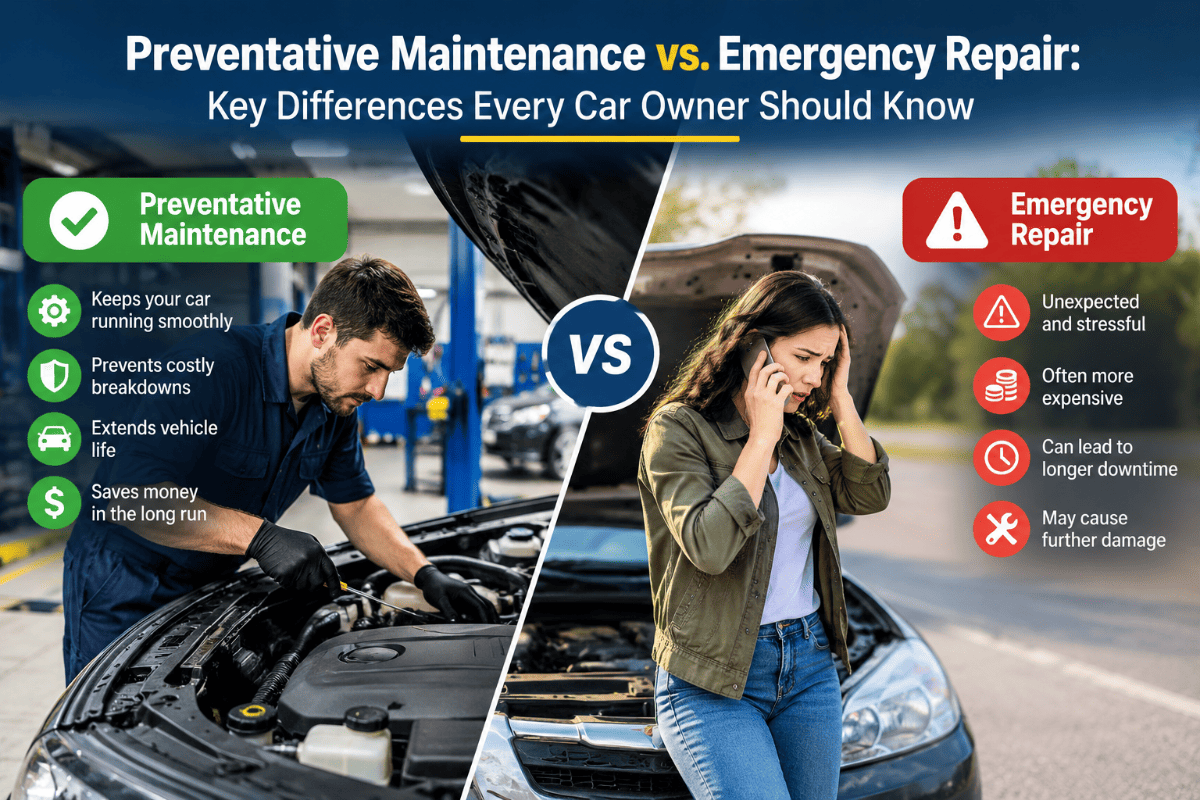
Preventative maintenance involves scheduled checks and services designed to keep your vehicle in good working order. Emergency repair addresses sudden faults that affect safety, performance, or the ability to drive.
The main difference lies in timing and purpose. Preventative care focuses on reducing the risk of problems, while emergency repairs restore safe operation after a fault occurs.
Preventative Maintenance: Fix Small Issues Early
Routine service gives us a chance to inspect key parts and spot wear before it causes trouble. We check items such as engine oil, filters, tires, brakes, fluids, and battery condition. We also follow the service schedule recommended by the vehicle manufacturer.
These visits help us find worn parts, leaks, and other issues while the vehicle is still safe to drive. Replacing a worn belt or weak battery on time also reduces the risk of an unexpected breakdown.
Emergency Repair: Address Urgent Problems
Emergency repairs become necessary when a sudden fault leaves your vehicle unsafe or unable to run as expected. Examples include an overheated engine, failed brakes, a dead battery, or a transmission problem that stops the car from moving.
Our first priority is to identify the cause and assess whether the vehicle is safe to drive. If a serious fault affects braking, steering, engine temperature, or oil pressure, stop driving and arrange professional help.
Read More :- What Causes Transmission Fluid to Leak From a Vehicle
| Key factor | Preventative maintenance | Emergency repair |
| Timing | Planned around service needs | Starts after a sudden fault or urgent warning |
| Main goal | Reduce wear and catch early problems | Restore safe operation |
| Cost planning | Easier to budget for | Costs vary with the fault and damage |
| Vehicle downtime | Usually easier to plan | May disrupt daily travel |
| Common examples | Oil changes, tire checks, fluid service | Overheating, brake failure, sudden breakdown |
| Best approach | Follow the service schedule | Act at once when safety is at risk |
Both types of service play an important role in vehicle care. Preventative work lowers the risk of certain failures, while prompt repairs address faults that routine service does not prevent.
In many cases, planned maintenance costs less than repairing damage after a part fails. For example, a worn belt is easier to replace before it breaks and affects other engine parts. Similarly, replacing a weak battery before it fails helps prevent an unexpected no-start situation.
Emergency repair bills depend on the fault, the parts needed, and the extent of the damage. An unchecked cooling system leak can lead to overheating and serious engine damage. A small transmission fluid leak also deserves prompt attention before it causes more costly problems.
At 616 Auto Repair, we help customers understand the condition of their vehicles and the work each one needs. Clear inspections and repair estimates help you plan service around your budget without overlooking important safety issues.
A clear routine car maintenance checklist helps you keep track of service needs between visits. Your owner’s manual provides the best guide for service intervals, fluid types, and part replacement.
Here are key items to include:
These simple steps help you stay ahead of common problems. However, a home check does not replace a professional inspection, especially when a warning light appears or a part shows signs of damage.
Some vehicle problems need immediate attention. Knowing the warning signs helps you act before a fault becomes dangerous or causes more damage.
Arrange prompt professional help if you notice:
Pull over in a safe place when a serious warning appears. Turn off the engine if it overheats or loses oil pressure. Do not keep driving to see whether the problem clears up. Arrange towing if the vehicle is unsafe to operate.
Our emergency vehicle repair services focus on finding the fault and guiding you toward the right repair. The right fix starts with a proper diagnosis, not guessing which part needs replacing.
Some problems develop inside parts that are hard to check at home. A professional inspection gives us a closer look at your vehicle’s condition and helps reveal faults before they become more severe.
At 616 Auto Repair, our Full Auto Inspection Services support a complete review of key vehicle systems. Depending on your car’s needs, an inspection includes checks of the brakes, tires, battery, engine, fluids, belts, hoses, and visible leaks.
We also assess engine and transmission concerns when symptoms point to a problem. Early engine performance repair helps address issues such as rough running, poor acceleration, or unusual fuel use. Likewise, timely automatic transmission repair addresses shifting trouble before continued driving adds strain.
The aim is simple: understand the problem, explain the repair options, and help you make an informed choice.
Your vehicle deserves care before a small issue turns into a major headache. Regular service helps protect key parts, supports safe driving, and gives you a clearer picture of upcoming repair needs. Quick action on urgent faults also helps limit further damage.
At 616 Auto Repair, we help drivers understand their vehicle’s condition and choose the right service for their needs. Whether your car needs routine maintenance or shows signs of a serious fault, our team is ready to help.
Contact 616 Auto Repair today to schedule an inspection or discuss your repair needs. Stay ahead of vehicle trouble and give your car the care it needs for the road ahead.
Preventive maintenance includes planned services such as oil changes, tire checks, and inspections. Emergency repair addresses sudden faults, such as brake failure or engine overheating, that require prompt attention to restore safe vehicle operation.
Preventive maintenance is generally easier to budget for and helps reduce the risk of costly breakdowns. Emergency repairs become more expensive when a failed part damages other systems or requires towing and extra labor.
Follow the maintenance schedule in your owner’s manual, since service needs vary by vehicle and driving conditions. Check tires, lights, and fluid levels between visits, and arrange inspections when warning signs appear.
Serious warning signs include brake failure, engine overheating, low oil pressure, smoke, burning smells, and sudden loss of steering control. Stop in a safe place and arrange professional help rather than driving with a dangerous fault.
Regular maintenance helps reduce the risk of breakdowns by catching wear, leaks, and weak parts before they fail. However, it cannot prevent every sudden fault, so drivers should still act quickly when warning signs appear.