- Bays Available Today
- Bays Available Today
- Bays Available Today
- Bays Available Today
- Bays Available Today
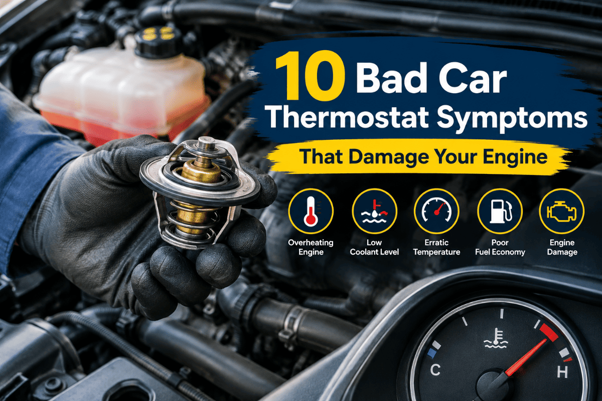
Your car’s engine needs the right temperature to run well. If it gets too hot, key parts face serious damage. If it stays too cold, fuel use rises and engine performance drops. A small part called the thermostat helps control this balance. When it fails, the problem quickly grows from a simple fault into a costly repair.
At 616 Auto Repair, we help drivers understand early warning signs and protect their engines from avoidable damage. Recognizing bad car thermostat symptoms helps you act before overheating, poor fuel economy, or engine wear becomes a major concern. Here are ten signs to watch for and what each one means for your vehicle.
A car thermostat controls the flow of coolant between the engine and the radiator. When the engine is cold, the thermostat stays closed to help the engine warm up. Once the engine reaches its set temperature, the thermostat opens and allows coolant to flow through the radiator.
If the thermostat sticks open, the engine struggles to reach its proper temperature. If it sticks closed, coolant flow becomes restricted and the engine risks overheating. Both faults affect engine health, so early checks matter.
Read More :- What Is the Difference Between a Rebuilt, Remanufactured, and Replacement Transmission?
1. Engine Overheating
An engine that runs too hot is one of the most serious warning signs. A thermostat stuck closed blocks the normal flow of coolant to the radiator. As heat builds, the temperature gauge climbs into the red zone.
Pull over safely, turn off the engine, and let it cool. Never open the radiator cap while the engine is hot. Continued driving puts the cylinder head, head gasket, and other engine parts at risk.
2. Engine Takes Too Long to Warm Up
A thermostat stuck open allows coolant to flow through the radiator before the engine reaches its proper operating temperature. As a result, the engine takes longer to warm up, especially in cold weather.
This issue affects fuel use and cabin heat. It also keeps the engine from working at its designed temperature, which leads to extra wear over time.
3. Temperature Gauge Keeps Changing
A temperature gauge that moves up and down without a clear reason points to a cooling system problem. A faulty thermostat sometimes opens and closes at the wrong time, causing uneven coolant flow.
Low coolant, a faulty temperature sensor, or trapped air also causes similar changes. Our team checks the full system before deciding which part needs repair.
4. Weak Heat From the Cabin Vents
Your car’s heater uses heat from the engine to warm the cabin. If the thermostat stays open, the engine struggles to reach the right temperature, so the air from the vents feels cool or lukewarm.
Check whether the problem continues after the engine has had time to warm up. If cabin heat stays weak, a thermostat or another cooling system fault needs inspection.
5. Poor Fuel Economy
An engine running below its normal temperature may use more fuel than expected. The engine control system adjusts fuel delivery based on temperature readings, so a cold-running engine affects fuel efficiency.
If your fuel costs rise without a clear change in driving habits, arrange an inspection. A faulty thermostat is one possible cause, although air leaks, sensor faults, and other engine issues also affect fuel use.
6. Coolant Leaks Near the Thermostat Housing
A damaged thermostat housing or worn seal leads to coolant leaks near the point where the thermostat sits. Look for wet spots, dried coolant marks, or a sweet smell near the engine bay.
Low coolant makes it harder for the system to control heat. A leak also points to a need for car cooling system repair. Avoid driving if coolant loss causes the engine to overheat.
7. Check Engine Light Turns On
Some vehicles switch on the check engine light when the engine takes too long to warm up or the temperature reading falls outside the expected range. A diagnostic trouble code helps narrow down the cause.
The light does not prove the thermostat has failed. Our car engine specialists check the stored codes and compare live temperature readings with the engine’s expected behavior before recommending a repair.
8. Engine Runs Colder Than Normal
A temperature gauge that stays below its usual range points to a thermostat stuck open or another temperature control issue. The engine takes longer to reach its proper operating range, which affects efficiency and cabin comfort.
A scan tool helps confirm whether the engine temperature matches the vehicle’s specifications. Early testing also helps rule out a faulty sensor or gauge.
9. Coolant Temperature Rises Soon After Starting
If the temperature gauge climbs too fast after a cold start, the cooling system deserves attention. A thermostat stuck closed is one possible cause, as coolant flow to the radiator remains restricted.
Low coolant, a failed water pump, or a blocked radiator also causes rapid overheating. Stop driving if the gauge reaches the danger zone. Further use under these conditions risks severe engine damage.
10. Coolant Warning Messages or Repeated Overheating
A dashboard warning about high coolant temperature needs prompt attention. Repeated overheating, even if the gauge returns to normal, points to a fault that requires diagnosis.
A failing thermostat is one possible reason, but leaks, fan problems, and water pump faults also affect cooling. Our car engine diagnostics service helps identify the cause and guides the next repair step.
A thermostat stuck open tends to cause slow warm-up, weak cabin heat, and a temperature gauge that stays below its normal range. A thermostat stuck closed tends to cause rapid overheating and restricted coolant flow to the radiator.
These signs provide clues, but they do not confirm the fault on their own. A trained technician checks coolant levels, scans for trouble codes, and tests temperature changes to confirm the problem.
Driving with a faulty thermostat puts your engine at risk. A thermostat stuck closed causes overheating, which damages the head gasket and cylinder head. A thermostat stuck open leads to poor fuel economy, weak cabin heat, and extra engine wear.
If you are wondering how long can you drive with a bad thermostat, the safest answer is to avoid driving until the problem is checked. If the engine overheats, pull over, switch it off, and arrange help. Never remove a hot radiator cap.
A faulty thermostat looks like a small problem, but it affects the health of your entire engine. Early diagnosis helps prevent overheating, wasted fuel, and damage to costly parts.
At 616 Auto Repair, our highly experienced car repair technicians inspect cooling system faults, explain the repair options, and help you decide on the right next step. If your temperature gauge acts up, your cabin heater blows cold air, or your engine runs too hot, contact our team to schedule an inspection. Get ahead of the problem and keep your vehicle ready for the road.
Common symptoms include engine overheating, slow warm-up, weak cabin heat, poor fuel economy, changing temperature readings, coolant leaks, and a check engine light. These signs need inspection to confirm the cause and prevent engine damage.
Yes. A thermostat stuck closed restricts coolant flow to the radiator, allowing engine heat to build up. If you ignore the rising temperature, the engine risks head gasket failure, warped parts, and costly repairs.
A stuck-open thermostat leads to slow warm-up and weak cabin heat. A stuck-closed thermostat leads to rapid overheating. A mechanic checks engine temperature readings and coolant flow to confirm the fault.
Driving with a faulty thermostat risks engine damage, especially if the engine overheats. Stop in a safe place, switch off the engine, and arrange an inspection. Never open the cooling system while it is hot.
The cost depends on the vehicle model, thermostat location, part price, and labor involved. Some repairs are simple, while others require extra work. Request a written estimate after a technician inspects the cooling system.