- Bays Available Today
- Bays Available Today
- Bays Available Today
- Bays Available Today
- Bays Available Today
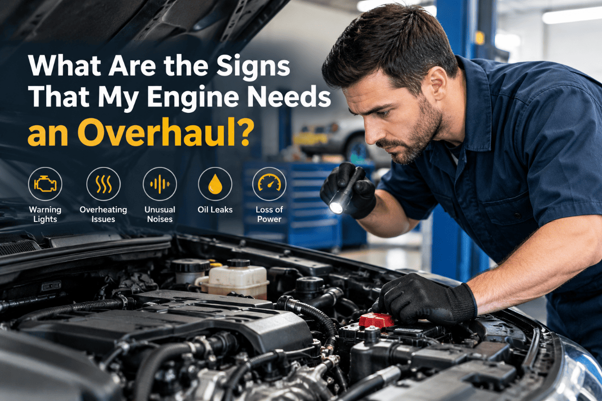
A healthy engine keeps your car moving, supports smooth acceleration, and helps you travel with confidence. However, worn parts, poor lubrication, overheating, and long-term use take a toll on engine health. When these issues grow, simple repairs no longer solve the problem. Recognizing the signs of engine failure early helps you protect your vehicle and avoid further damage.
An engine overhaul involves disassembling the engine, inspecting its internal parts, and repairing or replacing worn components. Not every engine problem requires this much work, so a proper diagnosis is vital. At 616 Auto Repair, we help drivers understand engine trouble and explore repair options based on the vehicle’s actual condition.
An engine gives warning signs when its internal parts start to wear out. Some symptoms point to minor faults, while others raise concern about serious damage. Pay attention to changes in engine sound, power, oil use, and exhaust smoke.
1. High Oil Consumption
Does your car need oil top-ups more often than expected? Worn piston rings, damaged valve seals, or other internal faults allow oil to enter the combustion chamber or escape through leaks.
Low oil levels also reduce lubrication. As a result, metal parts rub against each other and create excess heat. Check the oil level as directed in your owner’s manual. If oil use rises without a clear leak, arrange an engine inspection.
2. Blue Smoke From the Exhaust
Blue smoke from car exhaust points to engine oil burning inside the combustion chamber. Worn piston rings, damaged valve seals, or cylinder wear are possible causes. A brief puff during startup does not confirm the need for an overhaul, so a mechanic must check the source.
Thick white smoke after the engine warms up raises concern about coolant entering the cylinders. Black smoke points to excess fuel or an issue with the air-fuel mix. Each type needs a different diagnosis, so describe the smoke’s color and when it appears.
3. Knocking, Tapping, or Rattling Sounds
A deep knock from the engine deserves prompt attention. Worn bearings, poor lubrication, or damaged internal parts cause serious noise in some cases. A ticking sound also points to issues with valve parts or low oil levels.
Drivers who notice unusual engine noises while driving should avoid pushing the engine hard. If the oil pressure warning light comes on or the noise grows loud, pull over safely, shut off the engine, and arrange professional help.
4. Loss of Power and Slow Acceleration
An engine with worn internal parts struggles to deliver normal power. Your car may feel weak when climbing hills, merging into traffic, or speeding up. You might also notice rough idling, hard starts, or frequent stalling.
These car engine damage symptoms also come from faults such as clogged fuel injectors, a weak ignition system, or a blocked air filter. Testing helps separate a minor repair from deeper engine trouble.
5. Repeated Overheating
An engine that runs too hot faces a high risk of internal damage. Coolant leaks, a faulty thermostat, a damaged water pump, or a failed head gasket all lead to overheating. Severe heat also warps the cylinder head and harms engine seals.
If the temperature gauge reaches the danger zone, pull over safely and turn off the engine. Never remove a hot radiator cap. Let the engine cool and arrange an inspection before driving again.
Read More :- How to Fix a Car’s Engine Knocking When Accelerating
A warning sign alone does not prove an engine needs rebuilding. A proper diagnosis helps reveal the source of the problem and shows whether the damage affects internal parts.
A complete car engine diagnostics service includes checks such as:
The results guide the next step. A faulty sensor, ignition part, or cooling component needs a different fix from worn pistons or damaged bearings.
The right choice depends on the engine’s condition, the vehicle’s age, parts availability, and the total repair cost. An overhaul focuses on repairing or replacing worn internal parts while keeping the main engine structure if it remains fit for use.
Engine rebuilding services provide another route when internal wear calls for extensive work. Engine replacement deserves consideration if the block has severe cracks, major damage, or repair costs exceed the value of rebuilding. A mechanic should explain the scope, cost, warranty, and expected outcome of each option before work begins.
Routine care helps reduce wear and catch small faults before they grow. A regular car maintenance service also keeps key systems working as designed.
Follow these simple steps:
Good maintenance does not prevent every fault, but it helps reduce avoidable engine damage and supports reliable performance.
Engine trouble deserves attention before a small fault grows into a major repair. If your car burns oil, loses power, overheats, or makes strange sounds, a timely inspection helps you understand the problem and choose the right solution.
The team at 616 Auto Repair is ready to assess your engine and explain the next steps. Whether you need a basic repair or a detailed engine overhaul repair service, our goal is to help you make an informed choice based on your vehicle’s condition. Contact 616 Auto Repair today to schedule an inspection and get your car back on the road with greater confidence.
Common signs include high oil consumption, blue exhaust smoke, low power, engine knocking, repeated overheating, and poor compression. A mechanic must test the engine to confirm whether these symptoms point to serious internal wear.
Yes. High oil use points to worn piston rings, damaged valve seals, or other internal faults. However, external leaks also cause oil loss. An inspection helps identify the cause before a mechanic recommends rebuilding.
Engine knocking sometimes points to worn bearings or poor lubrication, both of which threaten internal parts. Stop driving if the knock is severe or the oil pressure warning light appears, then arrange a professional inspection.
Mechanics review compression, oil pressure, fault codes, fluid condition, and internal wear. They then compare repair costs, parts availability, and engine condition to determine whether an overhaul, a smaller repair, or replacement offers the best value.
Driving with serious engine damage risks a sudden breakdown and more costly repairs. Stop if the engine overheats, knocks loudly, or shows low oil pressure. Arrange towing and a professional inspection instead of risking further harm.