- Bays Available Today
- Bays Available Today
- Bays Available Today
- Bays Available Today
- Bays Available Today
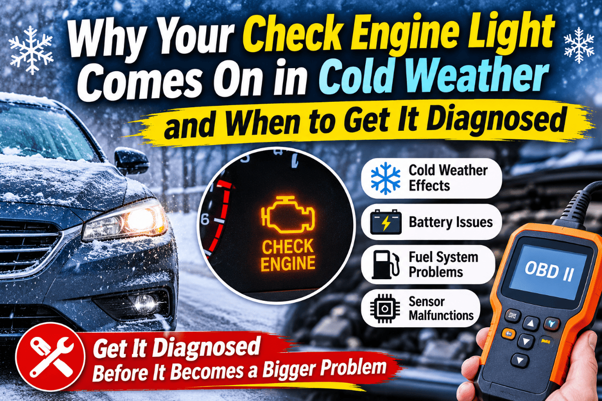
A cold morning, a quick turn of the key, and suddenly your dashboard lights up with a warning. The check engine light can catch any driver off guard, especially during winter. Cold temperatures affect several engine parts, sensors, and fuel system components. Even a small change in how these parts work can trigger a warning. If you notice a check engine light on in cold weather, your vehicle needs attention to find the cause.
At 616 Auto Repair, we help drivers understand dashboard warnings through proper testing and clear repair advice. Knowing what triggers the light helps you take the right steps and keep your vehicle in good shape throughout the winter.
Your engine needs the right mix of air, fuel, and spark to run well. Cold weather changes how these parts work during startup and while driving. Your vehicle also uses several sensors to check engine temperature, fuel flow, air intake, and exhaust gases. When a sensor detects a reading outside its set range, it sends a signal to the engine control module. The module then stores a fault code and turns on the check engine light.
A cold-weather warning does not point to one exact problem. The stored code gives a starting point for diagnosis. Here are some common reasons behind the warning.
1. A Weak Battery Affects Engine Performance
Cold weather puts extra strain on your car battery. Low temperatures slow down the chemical process inside the battery, which reduces its ability to supply power. Your starter needs enough power to turn the engine, while the vehicle’s control systems need a steady electrical supply.
A weak battery or poor battery connection can affect sensor readings and engine startup. In some cases, low voltage triggers warning codes. If your car takes longer to start, the lights look dim, or the engine turns over slowly, ask a technician to test the battery and charging system.
2. A Loose or Damaged Gas Cap
Your gas cap plays a key role in the fuel vapor control system. It seals the fuel tank and helps the system keep fuel vapors inside. Cold temperatures can stiffen older rubber seals. A loose cap or worn seal allows vapor to escape and affects the system’s pressure readings.
Your vehicle then stores an evaporative emissions fault code. Check the gas cap after refueling and make sure it clicks into place. If the warning stays on after a few trips, schedule a proper inspection.
3. Faulty Oxygen or Temperature Sensors
Your engine relies on sensors to maintain the right fuel mixture. The oxygen sensor checks the amount of oxygen in the exhaust. The engine coolant temperature sensor tells the control module how warm the engine is.
During cold starts, the engine needs a richer fuel mixture. A faulty sensor sends incorrect information, which affects fuel delivery and engine performance. Your car might also show poor fuel economy, rough idling, or longer warm-up times. A technician uses scan data and tests to check whether a sensor needs repair or replacement.
4. Moisture in Electrical Connections
Winter brings rain, snow, frost, and damp air. Moisture around electrical connectors, wiring, and sensor plugs affects the signals your engine control system receives. Older wiring and worn seals need special attention during a cold-weather inspection.
A loose connection also creates an irregular signal. Your dashboard warning might appear during startup and disappear after the engine warms up. A proper inspection helps find the source instead of replacing parts without a clear reason.
5. Spark Plugs and Ignition System Problems
Spark plugs create the spark your engine needs to burn fuel. Cold starts place extra demands on the ignition system. Worn spark plugs, weak ignition coils, and damaged wires affect how well each cylinder burns fuel.
You might notice engine shaking, slow acceleration, rough idling, or trouble starting. These signs deserve attention, especially if the check engine light flashes. A technician checks ignition parts and engine codes to find the source of the problem.
Read More :- What Causes Transmission Cooling Lines to Fail or Leak?
The way your check engine light behaves gives an important clue about the problem. A steady light and a flashing light call for different levels of attention.
Timing matters when your dashboard shows an engine warning. A quick response helps identify the issue and gives your vehicle the right care.
If the light stays on after a cold start, pay attention to how the engine runs. Notice any changes in sound, fuel use, acceleration, or idle speed. These details help a technician narrow down the cause.
Schedule an inspection if:
Drivers who ask when should I get my check engine light diagnosed should follow one simple rule: arrange a diagnostic check as soon as the warning appears and seek urgent help for a flashing light or serious changes in engine performance.
A dashboard warning gives you a clue, but it does not explain the full problem. At 616 Auto Repair, we use a step-by-step process to check the engine and its related systems.
1. Scan the Stored Fault Codes
A technician connects a diagnostic scan tool to your vehicle’s onboard diagnostic port. The tool reads stored trouble codes and shows which system triggered the warning. These codes point to areas that need more testing.
2. Review Live Sensor Data
Next, the technician checks live readings from the engine sensors. These readings include coolant temperature, oxygen levels, fuel trim, and engine speed. Comparing the readings with the expected values helps narrow down the cause.
3. Inspect the Related Parts
A scan code does not always mean the named part needs replacement. For example, an oxygen sensor code could point to a wiring issue, an exhaust leak, or a fuel mixture problem. A physical inspection helps confirm the source.
4. Complete the Needed Repairs and Retest
After finding the cause, the technician explains the repair and its purpose. The repair process depends on the fault. It could involve a new sensor, spark plugs, wiring repair, or another engine service. After the repair, the technician clears the code when appropriate and checks the system again.
Our engine diagnostics service focuses on finding the actual cause of the warning. This approach helps drivers understand their vehicle’s needs and make informed repair decisions.
Winter driving puts extra demands on your engine, battery, sensors, and ignition system. A dashboard warning deserves a proper check, even if your car starts and runs as expected. At 616 Auto Repair, we focus on accurate testing, clear explanations, and repairs based on your vehicle’s actual needs.
Do not let a small warning turn into a bigger repair job. Schedule your check engine light repair service with 616 Auto Repair today. Bring your vehicle in, let our technicians find the cause, and head into the next cold morning with greater confidence.
Cold temperatures affect batteries, sensors, wiring, fuel vapor systems, and ignition parts. A faulty reading or weak electrical connection triggers a stored fault code, which turns on the check engine light.
A steady light needs prompt diagnosis, even if your car runs well. A flashing light signals a serious misfire. Pull over safely, switch off the engine, and arrange professional help.
A steady light points to an engine or emissions fault that needs diagnosis. A flashing light signals a serious misfire, which requires you to stop driving and arrange urgent service.
A technician uses a scan tool to read fault codes and review live sensor data. The technician then checks related parts, wiring, and connections to confirm the cause before recommending repairs.
Arrange a diagnostic inspection as soon as the light appears. Seek urgent help if it flashes or your vehicle shakes, loses power, overheats, or shows other serious changes during driving.