- Bays Available Today
- Bays Available Today
- Bays Available Today
- Bays Available Today
- Bays Available Today
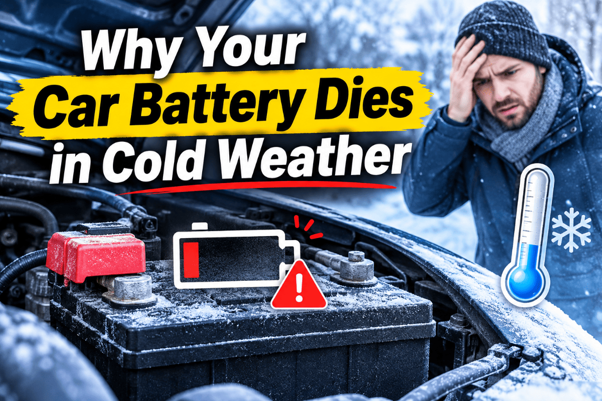
A car that starts with one turn of the key in summer can struggle to start on a freezing winter morning. Cold weather puts extra strain on your vehicle’s battery and makes it harder for the engine to start. Even a battery that worked well during warmer months needs extra care when temperatures drop. Understanding why a car battery dies in cold weather helps you spot early warning signs and keep your vehicle ready for daily drives.
At 616 Auto Repair, we help drivers understand battery problems, check their vehicle’s electrical systems, and find the right repair solutions for reliable performance throughout the winter season.
1.Why Does Cold Weather Affect Your Car Battery?
Your car battery stores electrical energy and sends power to the starter motor, lights, and other electrical parts. It also supplies the energy needed to start the engine. Most cars use lead-acid batteries, which depend on chemical reactions to produce electricity.
Cold temperatures slow these chemical reactions. As a result, the battery produces less electrical power than it does in warm weather. At the same time, your engine needs more power to turn over because cold engine oil becomes thicker.
This creates two problems at once. Your battery supplies less power, while your engine demands more power. A healthy battery handles this extra load better than an older one.
Drivers who face cold weather car battery problems should understand how temperature affects battery performance. Even a small drop in battery strength becomes more noticeable during winter. Regular battery checks help keep track of its condition before the cold season arrives.
2. How Does Cold Weather Drain a Car Battery?
Cold weather affects both the battery’s power output and the way your vehicle uses electricity. Several factors work together to put extra pressure on the battery.
Slower Chemical Reactions
A battery produces electricity through chemical reactions between its internal plates and electrolyte solution. Low temperatures slow these reactions, which reduces the battery’s ability to deliver power.
For example, a battery that starts your car with ease in mild weather needs to work harder during freezing conditions. Its available power drops as the temperature falls.
Thicker Engine Oil
Engine oil flows more slowly in cold weather. It becomes thicker and creates more resistance as the engine starts. The starter motor needs extra power to turn the engine until the oil begins to flow at its normal rate.
An older battery struggles with this extra demand. In contrast, a healthy battery with a strong charge provides the power needed for a smooth start.
Extra Use of Electrical Accessories
Winter brings more use of electrical features inside your car. Drivers run the heater, rear window defroster, heated seats, headlights, and windshield wipers.
These features draw power from the vehicle’s electrical system. The alternator supplies electricity while the engine runs and recharges the battery. However, short trips and heavy accessory use give the battery less time to recover its charge.
Low Battery Charge
A battery that starts winter with a low charge faces a harder job. Cold temperatures reduce its power output even further. In addition, leaving lights or other electrical features on while the engine is off drains its stored energy.
These factors explain how cold weather drains a car battery and why battery care matters before winter begins.
Read More :- The Ultimate Summer Vehicle Inspection Checklist for Drivers
3. What Are the Common Signs of a Weak Car Battery?
Your car gives several clues when its battery starts losing strength. Paying attention to these signs helps you arrange a battery check before a small issue affects your daily routine.
Look for these common weak car battery symptoms:
A swollen battery case, damaged terminals, or white and blue deposits around the battery connections also deserve attention. These signs point to a need for a professional inspection.
At 616 Auto Repair, we check the battery and its connections to find the source of the problem. We also inspect the charging system to understand how well your vehicle maintains battery power.
4. What Other Vehicle Problems Affect Battery Performance?
The battery does not work alone. It depends on several other parts to keep your vehicle running. A problem in the charging or starting system also affects battery performance.
Alternator Problems
The alternator recharges your battery while the engine runs. It also supplies electricity to the vehicle’s systems. A worn alternator, loose belt, or faulty connection affects its ability to charge the battery.
A battery that loses charge again after replacement needs a full charging system check.
Corroded or Loose Battery Connections
Battery cables carry electricity between the battery, starter, and charging system. Corrosion, loose clamps, or damaged cables interrupt the flow of power.
A mechanic checks the terminals, cable condition, and connections during a battery inspection. Clean and secure connections support proper electrical flow.
Starter Motor Issues
The starter motor turns the engine when you start your car. A worn starter draws too much power or struggles to turn the engine. These problems sometimes produce symptoms similar to a weak battery.
Our technicians inspect the battery, starter, and alternator to find the actual source of starting trouble. We also offer starting and charging system repair to address problems across these connected parts.
5. How Can You Protect Your Car Battery During Winter?
A few simple habits help your battery handle cold weather. Good battery care also supports reliable engine starts and keeps your electrical system in good shape.
Follow these useful steps:
These steps support battery health, but a professional test gives you a clearer picture of its actual condition.
6. When Should You Get Your Car Battery Tested or Replaced?
Most car batteries last around three to five years. However, battery life depends on driving habits, climate, vehicle type, and maintenance. Cold winters also place extra strain on older batteries.
A battery test checks its voltage, charge level, and ability to deliver power. A load test checks how well it performs under demand. These checks help a mechanic decide whether the battery needs charging, further inspection, or replacement.
At 616 Auto Repair, we provide car battery testing and replacement to help drivers understand their battery’s condition. Our technicians also inspect the alternator, starter, cables, and battery terminals before recommending a repair.
If your car still struggles to start after a battery replacement, a wider inspection helps uncover other causes. Our Engine Diagnostic Test Services help identify engine-related faults, while services such as engine coil replacement address ignition coil problems when testing confirms a fault.
A reliable winter start begins with a healthy battery and a well-maintained electrical system. A quick battery check before the first freeze gives you a better idea of your car’s condition and helps you plan the right service.
At 616 Auto Repair, we look beyond the battery itself. Our technicians inspect the starting and charging system, check electrical connections, and identify faults that affect engine starts. We focus on finding the cause and recommending the right repair for your vehicle.
Don’t let the first freezing morning catch your car off guard. Schedule your battery inspection with 616 Auto Repair and keep your vehicle ready for every winter drive.
Cold temperatures slow the chemical reactions inside a battery and reduce its power output. At the same time, thick engine oil makes starting harder, so the engine needs more power.
Battery performance starts to drop around 32°F (0°C). At 0°F (-18°C), a fully charged battery delivers much less power than it does at warmer temperatures, making engine starts harder.
Common signs include slow engine cranking, clicking sounds, dim headlights, dashboard battery warnings, and electrical issues. A battery that needs frequent jump-starts also deserves a professional check.
Most car batteries last three to five years, depending on their type, care, and driving habits. Cold temperatures put extra strain on older batteries, so regular testing helps track their condition.
Yes. A pre-winter battery test checks its charge, power, and overall condition. A mechanic also checks the charging system and connections, giving you a clear idea of your battery’s health.