- Bays Available Today
- Bays Available Today
- Bays Available Today
- Bays Available Today
- Bays Available Today
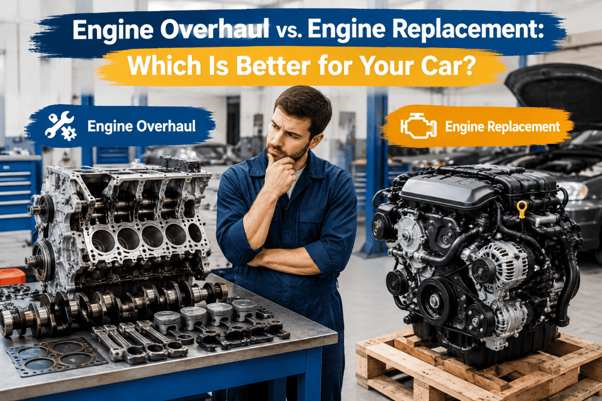
An engine problem can turn a reliable car into a source of stress. Strange noises, thick exhaust smoke, low power, or rising oil use often point to trouble under the hood. When internal damage becomes serious, drivers face an important choice: repair the engine they have or install another one.
The decision between engine overhaul vs. engine replacement depends on the extent of damage, repair costs, vehicle age, and long-term plans. Both options offer a path back to reliable driving, but each suits different needs. At 616 Auto Repair, the goal is to help drivers understand their options, compare the costs, and choose a repair plan that fits their vehicle and budget.
An engine overhaul focuses on restoring the existing engine. Engine replacement involves removing the damaged unit and installing another compatible engine. The right choice starts with a clear picture of the engine’s condition.
What Is a Car Engine Overhaul?
It is a repair process in which a mechanic takes apart the engine, checks its internal parts, and repairs or replaces worn components. The work depends on the damage and the engine’s design.
An overhaul often includes new piston rings, bearings, seals, and gaskets. The mechanic also inspects the cylinder head, valves, crankshaft, and pistons. Machine work is required if certain parts fall outside the manufacturer’s limits.
The main benefits of engine overhaul include keeping the original engine block when it remains fit for use and replacing worn parts without changing the entire engine. This option suits engines with repairable internal damage.
What Is Car Engine Replacement?
It involves removing the faulty engine and fitting another unit that matches the vehicle’s requirements. The replacement engine might be new, rebuilt, or used, so its condition and history matter.
The benefits of engine replacement service include a practical solution when the original engine has severe damage. A suitable replacement also reduces the need to repair each damaged internal part of the old unit. However, installation costs, engine compatibility, parts availability, and warranty terms all deserve attention.
Read More :- What Is The Difference Between An Engine Replacement And An Engine Rebuild
Both options aim to restore engine function, but the work, cost, and risks differ.
| Factor | Engine Overhaul | Engine Replacement |
| Main work | Repairs and restores the existing engine | Removes the old engine and installs another unit |
| Best suited for | Repairable internal wear or damage | Severe damage or an unfit engine block |
| Cost | Depends on parts, labor, and machine work | Depends on engine type, purchase price, and labor |
| Repair time | Depends on inspection findings and parts supply | Depends on engine availability and installation needs |
| Engine history | Keeps the original engine | Depends on the replacement unit’s history |
| Warranty | Depends on the shop and parts used | Depends on the engine supplier and installation terms |
No single option wins in every case. A written estimate helps reveal the full cost and the work included in each plan.
An overhaul looks attractive when the main engine parts remain in good condition. The mechanic replaces worn components and reuses parts that pass inspection. However, hidden damage found during disassembly adds to the final bill.
Replacement offers a clearer path when internal damage is too severe to repair at a sensible cost. Still, the price depends on whether the unit is new, rebuilt, or used. Installation, fluids, seals, and related repairs also affect the total.
Compare these points before making a decision:
The lowest quote is not always the best deal. A clear estimate with quality parts and sound repair work offers better value than a low price with unclear terms.
The symptoms alone do not tell the full story. An engine that knocks, overheats, burns oil, or loses power needs a proper inspection before you start any major repair.
Professional engine diagnostics help identify the source of trouble. A mechanic checks fault codes, oil pressure, compression, coolant condition, and other signs of wear. Compression and leak-down tests also help show whether the cylinders seal as they should.
Consider an overhaul when the damage is limited to repairable parts. Replacement becomes a stronger option when the engine block has serious cracks, major internal damage, or repair costs approach or exceed the price of a suitable replacement.
At 616 Auto Repair, a careful inspection helps drivers compare both paths based on the vehicle’s actual condition rather than guesswork.
The lifespan of either option depends on repair quality, parts condition, driving habits, and routine maintenance. A properly overhauled engine with sound parts and correct assembly supports years of further use. A quality replacement engine also offers long-term service when installed to the manufacturer’s requirements.
Before approving either repair, ask about the parts used, the break-in process, oil change timing, and warranty terms. Follow the shop’s care instructions after the repair. Keep up with oil and filter changes, coolant checks, and scheduled service to protect the engine.
Choosing between an overhaul and replacement starts with understanding what has gone wrong. The right repair restores engine function while helping you manage costs and plan for future driving.
616 Auto Repair helps drivers assess engine trouble and weigh their repair options. If your car shows signs of internal wear, oil loss, overheating, or poor performance, schedule an inspection with our team. Contact 616 Auto Repair today to discuss your vehicle’s needs and find a repair plan that makes sense for your car.
An engine overhaul restores the existing engine by repairing or replacing worn internal parts. Engine replacement removes the damaged unit and installs another compatible engine. The best choice depends on the damage, repair costs, and vehicle condition.
An overhaul costs less when the damage is limited and key engine parts remain usable. Replacement offers better value when damage is severe. Compare full estimates, labor, parts, warranty coverage, and possible extra repairs before deciding.
Start with a professional inspection and engine tests. Compression loss, oil pressure issues, internal wear, and block damage help guide the decision. A mechanic then compares repair costs with the price of a suitable replacement engine.
Both options support years of service when the work meets the required standards. Actual lifespan depends on parts quality, assembly, engine condition, driving habits, and maintenance. Review warranty terms and follow the shop’s service instructions after repairs.
An overhaul is worth considering when the vehicle remains in good shape, and the repair cost fits its value. Check the condition of the transmission, brakes, suspension, and other key parts before investing in major engine work.