- Bays Available Today
- Bays Available Today
- Bays Available Today
- Bays Available Today
- Bays Available Today
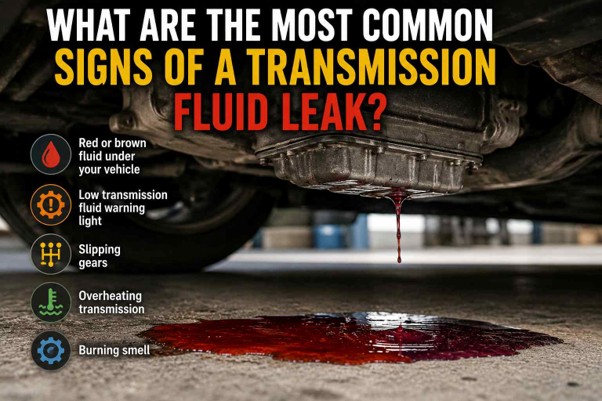
Your transmission works hard every time you drive, shifting gears smoothly so your engine sends power to the wheels. Fluid keeps this whole system cool, lubricated, and running the way it should. When a leak develops, gears grind, shifting gets rough, and your vehicle struggles to perform. A small drip today can turn into a costly repair tomorrow if you ignore it. Spotting signs of a transmission fluid leak early helps you catch problems before they turn into something bigger.
Fluid does more than lubricate moving parts. It cools the transmission, carries hydraulic pressure, and helps gears shift without a hitch. Losing fluid puts extra strain on every part of the system, and small leaks add up fast.
Drivers usually notice a leak through small clues before bigger problems show up. Paying attention to these details early keeps repair costs low and protects your gearbox from lasting damage.
If you notice any of these, it’s worth getting your vehicle looked at sooner rather than later. A small leak caught early is a simple fix. Left alone, it can lead to overheating and serious internal damage. Bring it by 616 Auto Repair, and our ASE-certified transmission technicians will track down the source and get it fixed right.
Read More :- What Are the Warning Signs That Indicate I May Need an Engine Replacement?
Color tells you a lot about what’s dripping under your car and how urgent the problem might be. Fresh fluid looks bright, while older fluid darkens with age and use.
Fresh transmission fluid usually runs bright red or pink with a slightly sweet smell, almost like something out of a candy shop. As it ages and breaks down, it shifts to brown, then eventually black once it picks up debris and loses its lubricating properties. Motor oil, by comparison, runs darker and thicker from the start. Spotting a reddish puddle under your car is a strong clue you’re dealing with a transmission issue rather than an oil leak, so you know exactly where to start looking.
Leaks rarely happen without a reason. A handful of worn or damaged parts are usually behind the drip you see under your vehicle.
Worn Seals and Gaskets
Seals and gaskets keep fluid sealed inside the transmission housing. Heat and mileage wear these parts down over time, causing them to crack, shrink, or harden until fluid starts seeping through.
Damaged Transmission Pan
The pan sits at the bottom of the transmission and holds fluid in place. A dent, crack, or loose bolt here often leads to a slow, steady drip that’s easy to miss at first.
Cracked Fluid Lines
Cooler lines carry fluid to and from the radiator. Rust, road debris, or old age crack these lines over time, letting fluid spray or drip out while driving.
Failing Torque Converter Seal
When the torque converter seal wears out, fluid escapes near the bell housing. This spot is trickier to spot but shows up clearly during a proper inspection.
Guessing about a leak wastes both time and money. Our team follows a clear process to accurately identify the exact source before recommending any repairs.
Our ASE-certified technician team begins every job with a thorough visual inspection of seals, pans, lines, and connection points for signs of wear or damage. From there, we run pressure tests and use dye detection kits to trace fluid back to its exact source. This kind of auto transmission leak diagnosis removes the guesswork completely, giving you a clear, honest answer fast. You’ll know exactly what’s wrong before we touch a single bolt.
Driving around with low fluid puts real strain on your gearbox. Catching these warning signs early saves your transmission from lasting, expensive damage.
Once we find the source of your leak, our team walks you through every option clearly. Repairs range from simple fluid top-offs to full seal and line replacements.
Fluid Top-Off and Flush
Sometimes a simple transmission fluid replacement solves the issue, especially when fluid has broken down or picked up contaminants over time.
Seal and Gasket Repair
Worn seals or gaskets get replaced before we refill the system, stopping the leak right at its source instead of masking it temporarily.
Full Leak Repair Service
Our transmission leak repair service covers pans, lines, and torque converter seals, giving your transmission a complete, lasting fix rather than a quick patch.
Ongoing Maintenance Plans
Regular fluid checks and scheduled inspections allow you to identify issues early, well before they develop into significant, costly repairs down the line.
Knowing how to identify a transmission fluid leak early and choosing a shop that explains every step keeps minor issues from turning into transmission replacements.
Don’t let a small drip turn into a major repair bill. Bring your vehicle to 616 Auto Repair in Grand Rapids, MI, and let our friendly, knowledgeable team take a look. Our dedicated, personalized client services and skilled technicians are ready to get your transmission back in top shape. Schedule your appointment today and drive with confidence again
Common signs include red or brown spots under your car, a burning smell, delayed or rough gear shifts, grinding noises, and a dashboard warning light. Catching these early prevents bigger, costlier transmission damage down the road.
Transmission fluid usually looks bright red or pink and feels slightly oily with a sweet smell. Motor oil runs darker and thicker. Checking color and texture helps you narrow down the source quickly.
Yes, low fluid reduces hydraulic pressure needed for smooth gear changes. This causes hesitation, slipping, or jerky shifts. Topping off fluid and fixing the leak source restores normal, smooth transmission performance again.
Driving with a leak isn’t safe long-term. Low fluid causes overheating and metal-on-metal wear inside the transmission. Get it checked quickly to avoid expensive internal damage or complete transmission failure.
Regular fluid checks, timely seal replacements, and scheduled maintenance help prevent leaks. Avoid overfilling fluid and address minor issues quickly. Routine inspections catch worn parts before they turn into bigger leaks.