- Bays Available Today
- Bays Available Today
- Bays Available Today
- Bays Available Today
- Bays Available Today
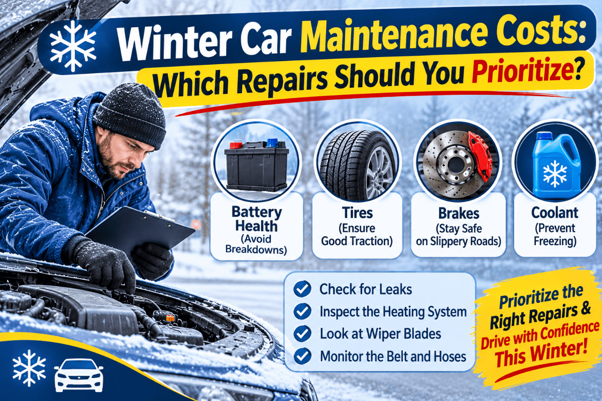
Winter puts extra strain on your car. Cold starts, icy roads, and dark commutes test the parts you rely on every day. A check before the first freeze helps protect your safety and plan your spending. At 616 Auto Repair, we help drivers sort urgent repairs from routine care, so each dollar goes toward a clear need. Understanding winter car maintenance costs starts with knowing which systems matter most.
Start with the parts that help you stop, steer, see, and start your car. These systems affect control and safe travel. Ask a technician to check them before cosmetic work.
1. Check the Battery and Charging System
Cold weather makes an engine harder to start, while a weak battery has less power to spare. If the engine turns slowly, lights dim, or you need a jump-start, arrange a battery test. Ask for a check of battery age, charge, terminals, and alternator output.
If the battery no longer holds a charge, replace it with the right size and rating. This ranks high among winter car repair priorities because a car that will not start disrupts daily plans.
2. Inspect Tires, Tread, and Pressure
Tires connect your car to the road. Cold air lowers tire pressure, and worn tread reduces grip on wet, snowy, or icy roads. Check pressure when tires are cold and follow the number on the driver’s door label, not the maximum printed on the tire.
Ask a technician to measure tread depth and look for cracks, bulges, uneven wear, or damage. If you drive in regular snow or ice, ask whether winter tires suit your routes. Good tires support braking and steering, so rank them high on your winter vehicle maintenance priorities list.
Read More :- 10 Bad Car Thermostat Symptoms That Damage Your Engine
3. Test the Brakes
Have a technician inspect pads, rotors, calipers, brake lines, and fluid before winter travel. Grinding, a pull to one side, a soft pedal, or a shake while braking needs a prompt check. Give brake concerns prompt attention.
4. Check Lights, Wipers, and Defrosters
Winter brings shorter days, rain, snow, and road spray. Replace failed headlights, brake lights, turn signals, and hazard lights. Clean cloudy light covers so other drivers can see your car.
Wiper blades should clear glass without leaving wide streaks. Fill the washer tank with cold-weather fluid rated for freezing temperatures. Check front and rear defrosters, too. Clear windows help you see traffic, signs, and people near the road.
After checking safety systems, turn to fluids, belts, hoses, and heating. These items support reliable operation in cold weather. Follow your owner’s manual and ask a technician to check their condition.
Engine Oil and Coolant
Oil flows more slowly in very cold weather. Use the grade listed by your vehicle maker and keep oil changes on schedule. An engine maintenance service checks oil, leaks, and service intervals.
Coolant protects the engine from freezing and carries heat away from it. Ask a technician to test freeze protection and inspect hoses and the radiator. Low coolant, a sweet smell, or a rising temperature gauge needs quick attention. Ask about engine overheating repair services for cooling-system faults before a small issue harms the engine.
Heating and Cabin Air
A working heater adds comfort, and the defroster clears windshield fog. If warm air takes too long, airflow feels weak, or windows stay foggy, ask for a heating and ventilation check. A dirty cabin air filter also reduces airflow, so include it in the inspection.
Belts, Hoses, and Washer System
Cold weather puts stress on rubber parts. Ask a technician to look for cracked belts, swollen hoses, loose clamps, and fluid leaks. Replacing a worn part during planned service helps prevent an unexpected stop.
Before the season starts, keep an emergency kit in the car with a scraper, gloves, a flashlight, jumper cables, and a blanket. Check that your spare tire and jack are ready, too. These simple steps support safer trips and help you handle a delay with proper care.
A smart plan separates urgent repairs from useful service and items that can wait. Ask the shop to explain each finding and provide an estimate before work begins. The cost of winter car maintenance depends on your vehicle, parts, labor, and the condition of each system.
Use this winter car maintenance checklist on a budget:
If you often ask how much winter car maintenance costs, remember that no single price fits every car. A basic inspection and wiper blades cost less than new tires, brakes, or major cooling-system work. Request an itemized quote with parts, labor, and shop fees. Approve repairs by priority.
A winter-ready car starts with a clear inspection and a repair plan built around your needs. At 616 Auto Repair, we explain what needs attention now, what belongs on the service calendar, and what each repair costs. We use plain language and provide an estimate before work begins.
Book a winter inspection with 616 Auto Repair. Let our technicians help you put safety first, plan your spending, and keep your car ready for the road.
Contact us today to schedule preventive car maintenance and head into winter with confidence.
The price depends on your vehicle, location, service needs, and parts. A basic inspection costs less than new tires, brakes, or major repairs. Request an itemized estimate from your repair shop before approving work.
Prioritize repairs that affect safe control and reliable operation. Start with brakes, tires, battery, lights, and cooling-system leaks. Ask a technician to explain urgent findings and rank the remaining work by need.
Planned service helps catch wear before it leads to a breakdown or damages another part. It also gives you time to compare estimates and plan the work. Savings depend on the fault and vehicle.
Cosmetic work and some non-urgent items can wait if a technician confirms they do not affect safety or vehicle operation. Get a written note and a review date before delaying any repair.
Financing options vary by repair shop and provider. Ask 616 Auto Repair about current payment choices, approval terms, fees, and repayment details before authorizing work. Review the full cost and terms before signing.