- Bays Available Today
- Bays Available Today
- Bays Available Today
- Bays Available Today
- Bays Available Today
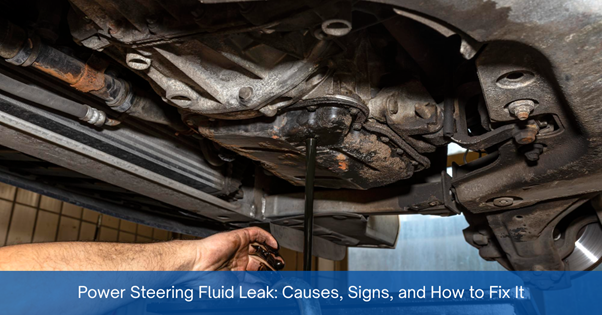
Have you ever noticed your steering feeling heavy or your car making strange whining noises when you turn? That could be a sign of a power steering fluid leak. At 616 Auto Repair, we see this problem more often than you’d think, and it’s something you don’t want to ignore. Power steering issues not only make your car harder to control, but they can also damage other components if left untreated. Luckily, we’re here to help you understand the causes, signs of a power steering fluid leak, and how to tackle a power steering leak repair before it becomes a bigger problem.
A power steering system helps you steer your car with ease. It uses hydraulic fluid to assist your steering, making tight turns smooth and manageable. When the fluid starts leaking, your steering becomes less responsive, and you may hear whining or groaning noises.
At 616 Auto Repair, we treat every vehicle with care. Our brake and steering services cover everything from routine checks to full system repairs. We know that even a small leak can lead to bigger, more expensive problems if left unchecked.
Understanding what causes leaks helps you prevent them. Some common power steering problems include:
At our auto repair shop, we inspect every part of your steering system during maintenance. Identifying these issues early saves you money and keeps your car running safely.
It’s important to spot problems early. Some signs of a power steering fluid leak include:
If you notice any of these signs, it’s time for a power steering leak repair. At 616 Auto Repair, we handle these repairs efficiently to restore smooth steering and prevent damage to your pump or rack and pinion.
When you bring your car to us for car repair services, we follow a clear process:
Our team of ASE-certified technicians is passionate about cars. We’re not just fixing a leak; we’re restoring confidence in every turn of your wheel.
Preventing a leak is always better than fixing one. Here are some tips from our brake and steering services experts:
At 616 Auto Repair, we offer full car repair services and vehicle customization, from oil changes to tire rotations. Our goal is to keep your car running smoothly and looking its best.
Power steering issues aren’t something to ignore. If you notice any signs of a power steering fluid leak, bring your vehicle to 616 Auto Repair. We’re a family-owned, full-service auto repair shop with ASE-certified technicians who treat every car like it’s our own. From brake and steering services to full car repair services and vehicle enhancements, we make sure you love what you drive.
Don’t wait until a small leak becomes a big problem. Contact us today and let us get your steering back to smooth and safe operation. Your car and your peace of mind deserve it!
Minor leaks might seem simple to fix, but without the right tools and knowledge, you could make it worse. We recommend bringing your car to a professional auto repair shop.
Costs vary depending on the cause. Replacing a hose is usually less expensive than repairing a pump. At 616 Auto Repair, we provide clear estimates before starting any work.
The most frequent culprit is worn or damaged hoses. Hoses dry out and develop cracks, causing fluid to leak.
Leaks typically occur at hose connections, seals, or the power steering pump.
Driving with a leak can be dangerous. Steering may fail unexpectedly, leading to unsafe driving conditions.
Signs include whining noises, difficulty turning the wheel, or fluid leaks near the pump or rack. Our technicians can perform a thorough inspection to pinpoint the problem.