- Bays Available Today
- Bays Available Today
- Bays Available Today
- Bays Available Today
- Bays Available Today
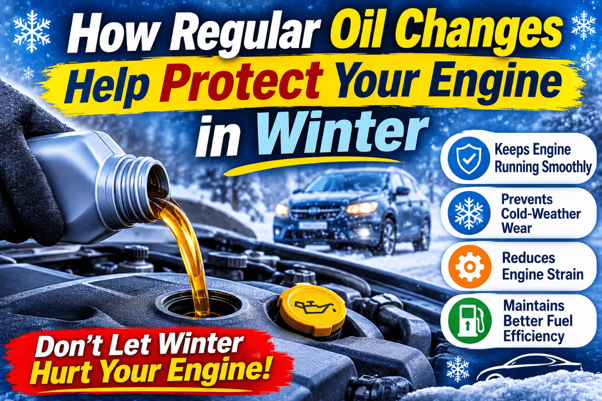
Winter brings cold mornings, icy roads, and extra stress for your vehicle. During this season, your engine needs proper care to stay in good shape. One of the simplest ways to protect it is through an engine oil change in cold weather. Fresh engine oil helps moving parts work smoothly, reduces friction, controls heat, and carries dirt away from important components.
Cold temperatures also make engine oil thicker, which affects how quickly it flows during startup. Therefore, following a regular oil change schedule helps maintain engine performance and supports long-term reliability. With the right oil and proper care, drivers gain better winter engine protection and reduce preventable engine wear.
What Is Engine Oil?
Engine oil is a special liquid that keeps your engine parts moving smoothly. It forms a thin protective layer between metal surfaces and reduces friction. It also carries dirt and tiny particles toward the oil filter. In addition, engine oil helps move heat away from important parts and supports clean engine operation.
How Does Cold Weather Affect Engine Oil?
Low temperatures make engine oil thicker. As a result, oil takes more time to flow through the engine during a cold start. Moving parts need proper lubrication as soon as the engine starts. Without it, friction and wear increase.
Old oil also loses some of its protective qualities. Short winter trips add another concern. The engine may not reach its normal operating temperature, allowing moisture and contaminants to collect in the oil. Using the wrong oil grade also affects its flow. Regular oil changes with the correct oil help maintain proper lubrication throughout the season.
Read More ;- What Are the Signs That My Engine Needs an Overhaul?
Clean engine oil supports several important parts, including:
Skipping scheduled oil changes affects lubrication and engine cleanliness. Old oil collects dirt, combustion waste, and other particles. Over time, these materials affect oil quality and contribute to sludge buildup. Cold starts place extra demands on the lubrication system, making proper oil care important.
Watch for warning signs such as unusual engine noises, rough operation, oil pressure warnings, and low oil levels. However, old oil is not the cause of every winter engine problem. A professional inspection helps identify the real issue.
| Step | What Happens |
| Cold temperatures develop | Engine oil becomes thicker and flows more slowly. |
| Engine starts | Moving parts need lubrication to reduce friction. |
| Oil circulation begins | The oil pump moves oil through engine passages. |
| Lubrication takes place | Oil creates a protective film between moving surfaces. |
| Contaminants collect | Dirt and combustion waste build up in used oil. |
| Oil change becomes necessary | Fresh oil and a new filter support proper lubrication. |
| Regular maintenance continues | Inspections help identify developing engine concerns. |
| Winter protection improves | Proper oil care supports reliable engine operation. |
Oil viscosity describes how easily oil flows at different temperatures. It plays an important role in winter engine care. Cold weather increases oil thickness, which affects circulation during startup. Therefore, selecting the correct grade is important.
Multi-grade oils work across a range of temperatures. For example, an oil marked 5W-30 has a winter rating that describes its cold-flow performance. The second number represents its viscosity at normal engine operating temperature.
Synthetic oils also offer benefits for cold-weather driving. Their formulation supports cold-temperature flow and temperature stability. However, the right choice depends on your vehicle manufacturer’s specifications.
The oil pump moves engine oil through small passages to protect bearings, pistons, and valve train parts. Meanwhile, the oil filter captures dirt and particles. Regular oil changes and filter replacement keep the lubrication system supplied with clean oil.
For drivers in Michigan, the correct oil grade and scheduled service support dependable Engine Maintenance throughout winter.
Benefits of Regular Winter Oil Changes
Regular oil changes support several important parts of engine care:
Limitations of Regular Oil Changes
Oil changes are important, but they do not solve every engine problem.
A little preparation makes your service visit more useful. Before booking an appointment, review your vehicle’s maintenance history and check the manufacturer’s oil recommendations.
Before Your Oil Change Appointment
Winter Engine Oil Maintenance Tips
Is an Oil Change More Important Before Winter?
An oil change before winter makes sense if your vehicle is close to its scheduled service date or contains old oil. Fresh oil with the correct viscosity supports lubrication during cold starts. However, follow the manufacturer’s service schedule instead of changing oil solely based on the season.
Both regular maintenance and delayed service affect engine health in different ways. Scheduled oil changes keep the lubrication system supplied with clean oil. In contrast, delaying service allows contaminants to collect and reduces oil effectiveness.
| Feature | Regular Oil Changes | Delayed Oil Changes |
| Oil condition | Fresh oil with the correct specifications | Oil with accumulated contaminants |
| Cold starts | Supports proper lubrication | Less effective protection from degraded oil |
| Engine wear | Helps reduce friction | Increased risk of preventable wear |
| Engine cleanliness | Supports clean internal parts | Greater risk of sludge buildup |
| Maintenance | Follows the recommended schedule | Service goes beyond the recommended interval |
| Long-term care | Supports engine reliability | Neglect increases the risk of costly repairs |
Winter driving makes scheduled maintenance important, especially for vehicles used for short trips and daily commutes. Regular service remains the better choice for long-term engine care.
You May Need an Oil Change If:
Schedule an Engine Inspection If:
An oil pressure warning needs prompt attention. Safely stop the vehicle, switch off the engine, and seek professional help. Continuing to drive with low oil pressure risks serious engine damage.
A mechanic also checks whether unusual noises point to lubrication trouble or another mechanical fault. Early diagnosis supports the right repair and reduces the risk of further damage.
| Myth | Fact |
| Oil changes are not needed during winter. | Engine oil needs regular replacement throughout the year. |
| All engine oils work the same way. | Oil grades and specifications differ by vehicle. |
| Thicker oil offers better winter protection. | Oil that is too thick slows circulation during cold starts. |
| Synthetic oil never needs replacement. | Synthetic oil follows the manufacturer’s service schedule. |
| Oil changes fix every engine problem. | Existing mechanical faults need separate inspection and repair. |
| Every vehicle needs an oil change every 3,000 miles. | Modern vehicles have different service intervals based on their design and oil requirements. |
Keep your engine ready for Michigan’s cold winter roads with regular maintenance from 616 Auto Repair. Located at 13435 Plainfield Ave NE, Suite 400, Grand Rapids, MI 49525, the shop provides professional auto care. Call (616) 888-8222 or visit 616autorepair.com to schedule an appointment and discuss the right oil for your vehicle
Regular oil changes supply clean lubricant to moving engine parts. Fresh oil reduces friction, carries contaminants toward the filter, supports heat management, and helps maintain proper lubrication during cold starts and daily winter driving.
Engine oil protects internal components from friction and wear. During winter, proper oil flow becomes important as low temperatures increase oil thickness. Correct oil also supports engine cleanliness and helps manage heat during operation.
Cold temperatures increase engine oil viscosity, making it thicker. This change affects how quickly oil flows through the engine during startup. Using the manufacturer’s recommended viscosity supports proper circulation and lubrication in winter.
Follow your vehicle manufacturer’s recommended service interval. Oil change timing depends on engine design, oil type, mileage, and driving conditions. Frequent short trips and cold starts also influence maintenance needs during winter.
Synthetic oil offers good cold-temperature flow and temperature stability, depending on its formulation. However, the best option depends on your vehicle’s oil specifications. Always check the owner’s manual before selecting synthetic or conventional oil.
Skipping oil changes allows dirt and combustion waste to collect in engine oil. Degraded oil provides less effective lubrication and increases the risk of sludge buildup and preventable engine wear during cold-weather operation.
Old engine oil contains accumulated contaminants and loses some protective qualities over time. Combined with cold temperatures, its condition affects lubrication during startup and increases the risk of friction between moving engine parts.
The best winter engine oil meets your vehicle manufacturer’s viscosity and performance specifications. Multi-grade synthetic oil suits several modern engines, but the correct grade depends on engine design and the temperatures your vehicle faces.
An oil change before Michigan winter is useful if your vehicle approaches its scheduled service interval. Fresh oil with the correct viscosity supports cold starts and proper lubrication throughout the colder months.
Regular oil changes support engine performance by maintaining proper lubrication and filtration. Fresh oil reduces friction between moving parts and helps the engine operate smoothly during cold starts and regular winter driving.
Cold temperatures affect oil flow during startup, while some engine parts produce brief operating noises. Persistent knocking, ticking, or rattling needs professional inspection to identify lubrication concerns or mechanical faults.
Yes, cold temperatures increase engine oil viscosity. Thicker oil flows more slowly during startup. Using the correct multi-grade oil helps maintain suitable flow and supports lubrication across different outdoor temperatures.
Short winter trips may prevent the engine from reaching normal operating temperature. As a result, moisture and contaminants collect in the oil. Drivers with frequent short journeys should follow their vehicle’s severe-service maintenance guidance.
Common signs include an oil maintenance reminder, dirty oil, low oil levels, and unusual engine noises. An illuminated oil pressure warning needs immediate attention and professional inspection rather than a routine oil change alone.
616 Auto Repair provides professional auto repair and maintenance services in Grand Rapids, Michigan. Visit 13435 Plainfield Ave NE, Suite 400, or call (616) 888-8222 to discuss your vehicle’s oil change needs.