- Bays Available Today
- Bays Available Today
- Bays Available Today
- Bays Available Today
- Bays Available Today
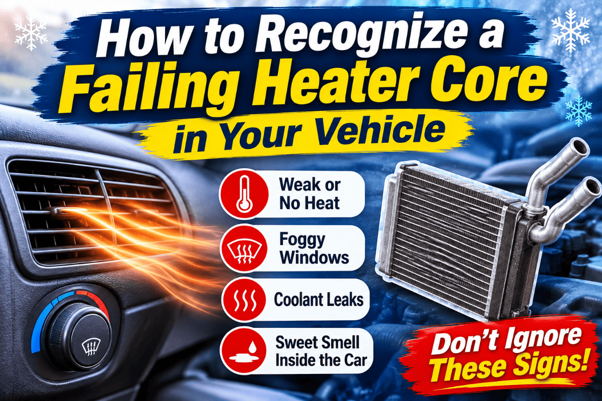
A warm car cabin makes winter drives comfortable, but your vehicle’s heater does much more than keep you cozy. It depends on a small part called the heater core to move heat from the engine into the cabin. When this part starts to fail, you may notice cold air from the vents, a sweet smell, or foggy windows. These signs point to possible trouble with your cooling system. At 616 Auto Repair, we help drivers understand failing heater core symptoms and find the right repair before a small issue affects other parts of the vehicle.
Knowing how your heater core works makes it easier to spot early warning signs. It also helps you explain the problem to a mechanic and make a smart repair choice.
A heater core works like a small radiator inside your car’s dashboard. It uses hot engine coolant to warm the air that enters the cabin. As the engine runs, coolant picks up heat and flows through small tubes inside the heater core.
Here is how the heating process works:
The heater core also plays a part in keeping your windshield clear. Your vehicle uses warm air to remove moisture from the glass during cold or damp weather.
A healthy heater core supports cabin comfort and helps the heating and defrost systems work as designed. However, corrosion, old coolant, dirt, and wear can damage its small tubes. Over time, these problems affect coolant flow and heat transfer.
Read More :- What Are the Common Signs of a Leaking Transmission Cooling Line?
A heater core rarely fails without giving you clues. Paying attention to changes in cabin heat, smells, and moisture helps you understand when your vehicle needs attention.
1. Your Heater Blows Cold or Lukewarm Air
One of the first signs involves a change in the air coming from your vents. You turn up the heat, adjust the temperature, and wait for warm air. However, the cabin stays cold or the vents produce only lukewarm air.
A clogged heater core restricts coolant flow through its small tubes. As a result, the system struggles to transfer enough heat into the cabin. Low coolant levels and a faulty thermostat also cause similar problems, so a proper inspection helps find the real cause.
If you keep asking why your car heater is blowing cold air, start by checking the coolant level once the engine has cooled. A mechanic should then inspect the cooling system, heater hoses, thermostat, and heater core.
2. You Notice a Sweet Smell Inside the Cabin
Engine coolant has a distinct sweet smell. If you notice this smell when you turn on the heater, a leaking heater core deserves attention.
Coolant inside the heater core flows through small tubes. A crack or damaged seal allows the fluid to escape into the heater housing. The blower fan then spreads the smell through the cabin.
A strong sweet coolant smell inside the car deserves a prompt inspection. Avoid treating air fresheners as a fix. A mechanic needs to find the source of the smell and check the coolant system for leaks.
3. Your Windows Keep Fogging Up
Foggy windows point to another possible heater core issue. A leaking core releases coolant vapor into the cabin. This moisture settles on the inside of the windshield and side windows. You might also notice a thin, greasy film on the glass. Coolant residue creates this film, and regular glass cleaner does not always remove it with ease.
A working defrost system helps clear normal window fog. However, repeated fogging with a sweet smell or damp carpet calls for a heater core inspection.
4. You Find Damp Carpet Near the Dashboard
Check the front passenger footwell for signs of moisture. A leaking heater core allows coolant to collect inside the heater housing and drain into the cabin.
The carpet may feel wet, sticky, or oily. You may also notice a sweet smell near the floor. These signs help separate a coolant leak from rainwater or water from wet shoes.
A mechanic should inspect the heater box, drain area, and coolant hoses to locate the leak.
5. Your Engine Starts Running Hot
A leaking heater core can reduce the amount of coolant in the cooling system. Low coolant levels affect the engine’s ability to control heat. As the coolant level drops, the temperature gauge may rise above its normal range.
Watch the temperature gauge during every drive. If the engine starts overheating, pull over in a safe place, switch off the engine, and let it cool. Never open the radiator cap while the engine remains hot.
A cooling system inspection helps find leaks and restore the correct coolant level.
Several heater problems share the same symptoms. For example, a faulty thermostat, low coolant, a damaged water pump, or a clogged heater hose can also affect cabin heat.
At 616 Auto Repair, we look at the full heating and cooling system before recommending a repair. A proper check helps identify the source of the trouble and prevents unnecessary part changes.
During an inspection, a mechanic may:
These checks help confirm whether your heater core is failing and another cooling system part needs attention.
The right answer depends on the type and size of the problem. A heater core with restricted coolant flow affects cabin heat and defrost performance. A leaking core brings another concern because it allows coolant to escape from the cooling system.
A steady coolant leak lowers the fluid level and raises the risk of engine overheating. High engine temperatures place extra stress on the radiator, water pump, hoses, and other engine parts.
A leak also affects the cabin. Coolant inside the footwell leaves residue, creates moisture, and produces a strong smell. Therefore, schedule an inspection as soon as these signs appear.
If the temperature gauge rises or you see steam, stop driving and arrange professional help. A nearby car engine overheating repair shop should inspect the cooling system before the vehicle returns to regular use.
A heater core replacement requires careful work because the part sits deep inside the dashboard in most vehicles. The exact steps depend on the make, model, and design of your car.
The repair process generally includes:
Some vehicles require more dashboard work than others. Your mechanic should explain the repair steps and expected labor before starting the job.
Your car’s heating system deserves the same care as its engine and brakes. Cold air, sweet smells, foggy windows, and damp carpets all give useful clues about heater core trouble. Early attention helps protect the cooling system and keeps your cabin comfortable.
At 616 Auto Repair, we take the time to inspect your vehicle, explain our findings, and recommend the right car heater repair for your needs. Our goal is to give every driver clear answers and dependable repair service.
Schedule an inspection with 616 Auto Repair today. Let our engine repair specialists find the source of the problem and bring your vehicle’s heating system back to proper working order.
Common signs include cold air from the heater, a sweet smell inside the cabin, foggy windows, damp front carpets, and falling coolant levels. Engine overheating also points to a possible cooling system leak.
Engine coolant has a sweet smell. A leaking heater core allows coolant to escape into the heater housing. The blower fan then spreads the smell through the cabin vents.
Yes. A leaking heater core releases coolant vapor into the cabin. This moisture settles on the inside of the windshield and windows, sometimes leaving a thin, greasy film on the glass.
A leaking heater core lowers coolant levels and affects windshield visibility. If the engine overheats, stop driving and arrange a tow. A mechanic should inspect the cooling system before further use.
The price depends on your vehicle’s make, model, parts, and labor time. Some cars need extensive dashboard removal. Ask your repair shop for an estimate after a full inspection.