- Bays Available Today
- Bays Available Today
- Bays Available Today
- Bays Available Today
- Bays Available Today
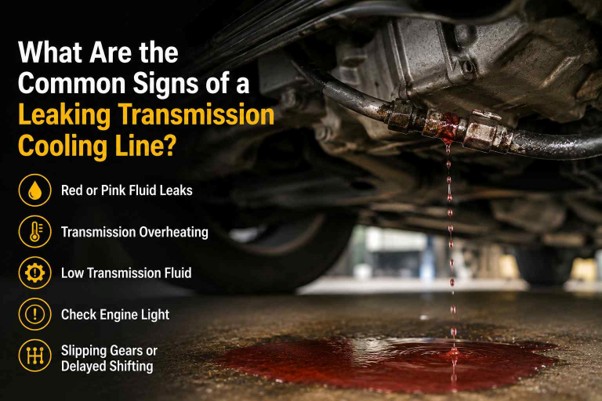
Your transmission cooling line plays a quiet but important role in keeping your vehicle running smoothly. The system transfers hot fluid to the radiator, where it cools before returning to allow for smooth gear shifting. If this line develops a leak, your transmission will quickly lose fluid, causing the entire system to struggle. A worn cooling line can turn a simple fix into a major repair if left unchecked. Knowing why your transmission fluid is leaking helps you catch the problem early and protect your gearbox from lasting damage.
The cooling line connects your transmission to the radiator, moving hot fluid out and cooler fluid back in. This constant loop keeps internal parts from overheating during long drives or heavy loads.
Spotting trouble early keeps small leaks from turning into expensive repairs. Watch for these warning signs.
Figuring out how to identify a transmission cooling line leak takes a bit of detective work, but it’s simpler than you think. Start by parking on clean pavement and checking for fresh spots the next morning. Pop the hood and look along the lines running from the transmission to the radiator, checking for cracks, rust, or wet spots. Give the fittings a look too, since loose connections are a common culprit. Catching the leak this way, before fluid runs critically low, saves you from bigger transmission trouble down the road.
Read More :- Can I Drive with a Bad Transmission?
Cooling lines don’t fail without reason. A handful of common issues are usually behind the drip you’re seeing.
Metal lines exposed to road salt, moisture, and weather corrode over time. Once rust eats through the metal, small holes form and fluid starts seeping out.
The connections where lines meet the transmission or radiator wear down with age. Vibration and heat cause these fittings to loosen or crack over time.
Road debris, rocks, or minor collisions can dent or puncture cooling lines, as they are located on the underside of the vehicle where they are exposed.
Some cooling lines use rubber sections that connect metal parts. These hoses dry out, crack, and become brittle after years of heat exposure.
Proper auto transmission diagnostics take the guesswork out of finding a leak. Our technicians start with a full visual inspection, checking lines, fittings, seals, and the transmission pan for wear. From there, we use pressure tests and dye kits to trace fluid back to its exact source. This process gives you a clear, honest answer about what’s wrong instead of a rough guess. Getting an accurate diagnosis upfront saves money and prevents the same leak from reappearing later.
Once we track down the leak, our team explains your options clearly before any work begins.
For minor damage, a transmission cooling line repair patches the affected section without replacing the whole line.
Heavily corroded or damaged lines need a full transmission cooler line replacement to prevent future leaks and keep fluid flowing properly.
Loose or worn fittings get tightened or replaced, stopping the leak right at the connection point.
After we complete the repairs, we refill the fluids and flush out any contaminants that may have built up during the leak.
Fixing a leaking transmission cooling line begins with accurate diagnosis, not guesswork. Our shop performs a thorough transmission cooling line leak repair, addressing rust, cracks, or fitting issues at their source. We use quality parts built to handle heat and pressure, so the fix lasts. Skipping this step or using a temporary patch often leads to repeat leaks, costing you more time and money in the long run.
A little upkeep goes a long way toward avoiding cooling line trouble down the road.
Following these maintenance tips keeps your cooling system in good shape and helps you avoid surprise leaks between scheduled visits.
Not every leak needs a full transmission overhaul, but every leak deserves a proper look. Our car repair services cover everything from small line patches to complete replacements, backed by ASE-certified technicians who know exactly what to check. We walk you through the diagnosis, explain your options honestly, and never push repairs you don’t need.
Don’t wait for a small drip to turn into a major transmission repair. Bring your vehicle to 616 Auto Repair in Grand Rapids, MI, and let our friendly, experienced team take a look. Our dedicated, personalized client services and skilled technicians are ready to track down the leak and get you back on the road with confidence. Schedule your appointment today.
Check for reddish fluid spots under your car, low fluid levels, a burning smell, overheating, and rough or delayed gear shifts. These signs indicate fluid loss that requires immediate attention.
Driving with a leak isn’t recommended. Low fluid causes overheating and increased wear on internal parts. Make sure to have it checked as soon as possible to prevent expensive, long-term damage to the transmission.
Rust, corrosion, cracked fittings, physical damage from road debris, and worn rubber hose sections all cause leaks. Age and constant heat exposure also weaken these lines over time.
Technicians perform a visual inspection, checking lines, seals, and fittings for damage. Pressure tests and dye kits help trace fluid back to its exact source for an accurate diagnosis.
Cost varies based on damage extent, vehicle type, and labor. Minor patches cost less than full replacements. Your technician provides an accurate estimate after inspecting the specific damage.
Yes, low fluid reduces lubrication and cooling, causing internal parts to overheat and wear faster. Ignoring a leak often leads to expensive repairs or complete transmission failure over time.