- Bays Available Today
- Bays Available Today
- Bays Available Today
- Bays Available Today
- Bays Available Today
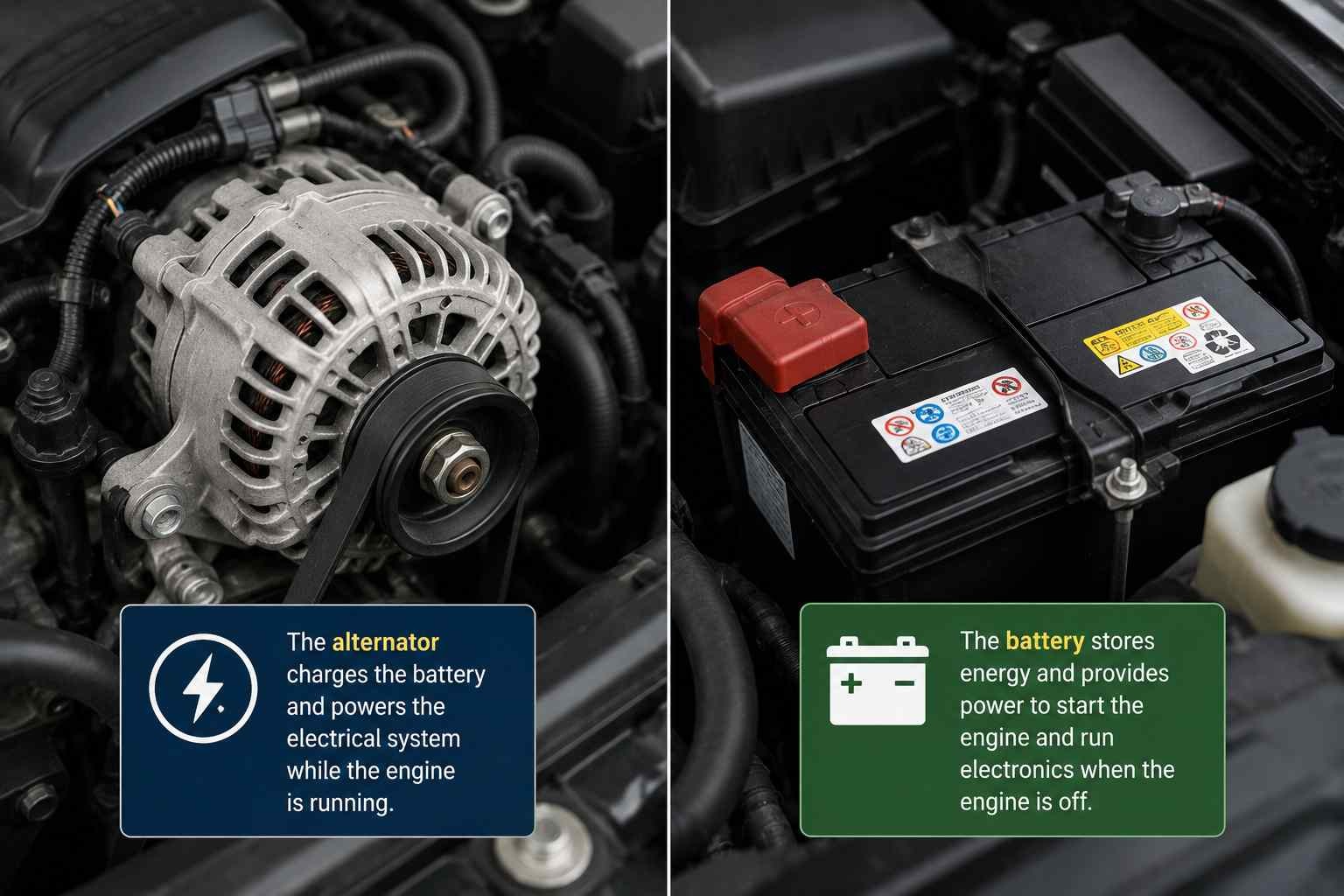
The alternator vs. battery difference is simple. The battery turns the car on, and the alternator keeps it running smoothly. The battery stores power and sends it to the engine when you turn the key. The alternator makes new power while the car is moving. Knowing the difference between an alternator and a battery helps you understand why your car may not start or suddenly stop working.
Have you ever expected your car to start, but it failed? That can feel scary and confusing, but learning these basics makes it much easier to figure out what is wrong.
Every car needs electricity to work. Your lights, radio, and even your engine depend on it. A simple car electrical system explained shows that your battery and alternator work as a team. If one stops working, the car will have trouble.
Your battery is like a small power box. It stores energy and gives it to your car when needed.
What the Battery Does:
When talking about car battery vs. alternator issues, battery problems are common. If your car does not start, the battery is often the reason.
To understand how an alternator works vs. a battery, think of the alternator like a charger. It keeps making power while your car is running.
What the Alternator Does:
If the alternator stops working, the battery will slowly lose power. Then your car may stop even while driving.
It is important to know how to tell if the battery or alternator is bad. Here are simple signs:
Signs of a Bad Battery:
Signs of a Bad Alternator:
The difference between a dead battery and a bad alternator is easy to spot. A dead battery means your car will not start. A bad alternator means your car may start but stop later.
If you notice car battery vs. alternator issues, try these steps:
For the best results, visit an Auto Electrical Repair Service. Experts use tools to find the exact problem quickly.
Taking care of your car helps avoid trouble. Here are simple tips:
If your battery stops working, a quick battery replacement service can fix the problem fast.
At 616 Auto Repair, we deliver professional auto repair in Grand Rapids, MI, combining expert knowledge with advanced tools. Our technicians ensure reliable results, whether it is a simple checkup or a major repair.
Now you understand the difference between your battery and alternator. These parts work together to keep your car running. If something feels wrong, do not wait too long. We are always here to help you stay safe on the road!
The battery stores electricity and helps start your car. The alternator makes electricity while the engine runs and keeps the battery charged. Both work together so your car can start, run, and power lights.
If your car does not start or makes clicking sounds, the battery may be weak. If it starts but stops while driving, the alternator could be bad. Testing helps find the exact issue.
Yes, a bad alternator cannot charge the battery properly. This causes the battery to lose power over time. Even a new battery can go dead if the alternator is not working correctly.
Yes, the car may start because the battery still has power. But the alternator will not recharge it, so the battery will drain quickly, and the car may stop soon after starting.
You can use a tool called a multimeter or visit a repair shop. The battery is tested when the car is off. The alternator is tested when the engine is running.
Common signs include flickering lights, weak power to electronics, warning lights on the dashboard, and the car stopping while driving. These signs show the alternator is not making enough electricity.
A bad battery may cause slow engine start, clicking sounds, dim lights, and no power at all. Batteries also wear out over time and may fail in very hot or cold weather.
An alternator usually costs more than a battery because it is more complex and takes more time to replace. Batteries are simpler and cheaper, but both are important for your car.
An alternator usually lasts about seven to ten years. Its life depends on how often you drive and how well you maintain your car’s electrical system over time.
A car battery usually lasts about three to five years. Weather, driving habits, and maintenance can change how long it lasts. Regular checks can help you know when to replace it.