- Bays Available Today
- Bays Available Today
- Bays Available Today
- Bays Available Today
- Bays Available Today
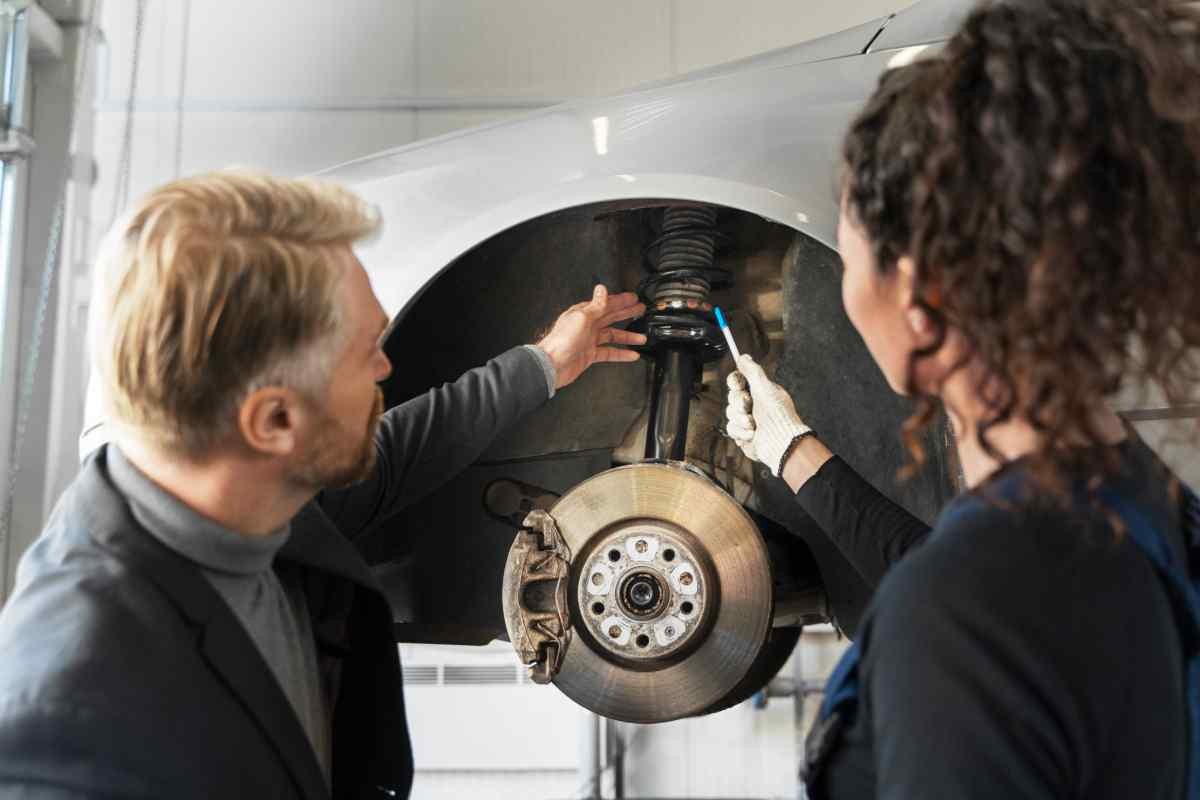
Brake pads are the friction material that presses against the brake rotors to slow your vehicle down. Brake rotors are metal discs attached to the wheels that the brake pads clamp onto during braking. Brake pads wear out faster, while rotors usually last longer but can warp, crack, or become too thin over time.
i) Brake Pads Definition
Brake pads are replaceable components made from friction material. When you press the brake pedal, the pads squeeze against the rotors to slow your car. They are designed to wear down gradually, which is normal and expected.
ii) Types of Brake Pads
For most daily drivers in Grand Rapids, ceramic brake pads are a popular choice because they balance performance, noise control, and longevity.
iii) Signs Your Brake Pads Are Worn Out
Ignoring these signs can damage your brake rotors and increase repair costs.
i) Brake Rotor Definition
Brake rotors are metal discs connected to your wheel hubs. When the brake pads clamp onto them, friction is created to slow the vehicle. Rotors also absorb and disperse heat generated during braking.
ii) Types of Brake Rotors
In Michigan winters, coated rotors are helpful because they resist rust caused by salt and moisture.
iii) Signs Your Brake Rotors Are Bad
These symptoms mean you may need brake rotor replacement along with new pads.
i) Difference Between Brake Pads and Rotors
| Feature | Brake Pads | Brake Rotors |
| Purpose | Create friction to stop the car | Provide a surface for pads to clamp onto |
| Material | Friction compound | Cast iron or steel disc |
| Wear Rate | Wears out faster | Wears slower |
| Common Symptoms | Squealing, grinding, thin pads | Pulsation, vibration, grooves |
| Replacement Frequency | More often | Less often |
| Cost | Lower | Higher |
| Safety Risk if Ignored | Can damage rotors | Reduces braking power |
ii) Which One Wears Out Faster?
Brake pads wear faster than rotors. However, if worn pads are ignored for too long, they can damage the rotors and force both parts to be replaced.
i) When You Can Replace Only Brake Pads
ii) When You Should Replace Pads and Rotors Together
iii) What Happens If You Install New Pads on Bad Rotors?
An expert brake repair service inspection ensures the correct parts are replaced.
i) Driving Habits
ii) Weather + Road Conditions
iii) Low-Quality Brake Parts
Choosing quality parts at a trusted auto repair shop in Grand Rapids helps brakes last longer.
● Average Lifespan of Brake Pads: Typical range is 30,000 to 70,000 miles. City driving and frequent braking shorten their life.
● Average Lifespan of Brake Rotors: The typical range is 50,000 to 100,000 miles. Some rotors may need resurfacing or earlier replacement.
● Real-World Tip: Mileage varies by driving style and conditions. A professional inspection is the only accurate way to know your brake condition.
i) Brake Pad Replacement Cost Factors
ii) Brake Rotor Replacement Cost Factors
iii) Why Cheap Brake Jobs Can Cost More Later
Low-quality parts can cause noise, premature wear, and safety risks. Proper brake pad replacement with quality components saves money long term.
i) Brake Pad Thickness Measurement
ii) Rotor Condition Check
iii) Test Drive Symptoms
This thorough process ensures accurate recommendations and safe braking.
When Is It Unsafe to Drive With Bad Brakes?
If you notice any of these, schedule service immediately.
If you’re in Grand Rapids, Ada, or Rockford, MI, and your brakes are squealing, grinding, or vibrating, a professional inspection can prevent rotor damage and keep your vehicle safe. 616 Auto Repair provides honest recommendations, quality brake rotors and brake pads, and reliable same-day service when possible.
Your Next Step for Safe Braking
Brake pads create friction. Brake rotors are the metal discs that they press against. Pads wear out faster, while rotors last longer but can become warped or grooved. The safest next step is a professional inspection.
Schedule a brake inspection at 616 Auto Repair today for safe, reliable stopping power!
Brake pads are friction materials that press against brake rotors to slow the vehicle. Rotors are metal discs attached to the wheels. Pads wear out faster, while rotors last longer but can warp or become too thin over time.
Yes, if the rotors are smooth, within thickness limits, and not warped or grooved. A mechanic must inspect them first. Installing new pads on damaged rotors can cause noise, uneven braking, and faster pad wear.
Common signs include steering wheel vibration, brake pedal pulsation, and uneven braking. Warped rotors create inconsistent contact with brake pads. A professional measurement confirms whether rotor replacement is necessary.
Grinding usually means the brake pads are completely worn, and metal is contacting the rotor. This can quickly damage the rotors and reduce stopping power. Immediate brake service is required to prevent costly repairs.
Most brake pads last between 30,000 and 70,000 miles. Driving habits, traffic conditions, and pad material affect lifespan. City driving and frequent hard braking will cause pads to wear out faster.
Brake rotors typically last between 50,000 and 100,000 miles. However, rust, heat, and worn brake pads can shorten their lifespan. Regular inspections help determine when resurfacing or replacement is needed.
Squeaky brakes often indicate worn pads or glazed surfaces. While not always immediately dangerous, they should be inspected soon. Ignoring the noise can lead to grinding, rotor damage, and reduced braking performance.
Squealing after replacement may be caused by low-quality pads, lack of proper lubrication, rotor surface issues, or improper installation. A professional brake service ensures correct fitment and reduces noise problems.
Ceramic pads are quieter, produce less dust, and last longer for daily driving. Semi-metallic pads provide stronger braking for heavy vehicles but can be noisier. The best choice depends on your driving needs and vehicle type.
Worn pads can lead to metal-on-metal contact, damaging the rotors and reducing stopping power. This increases repair costs and creates a serious safety risk. Timely brake pad replacement protects both your vehicle and your safety.