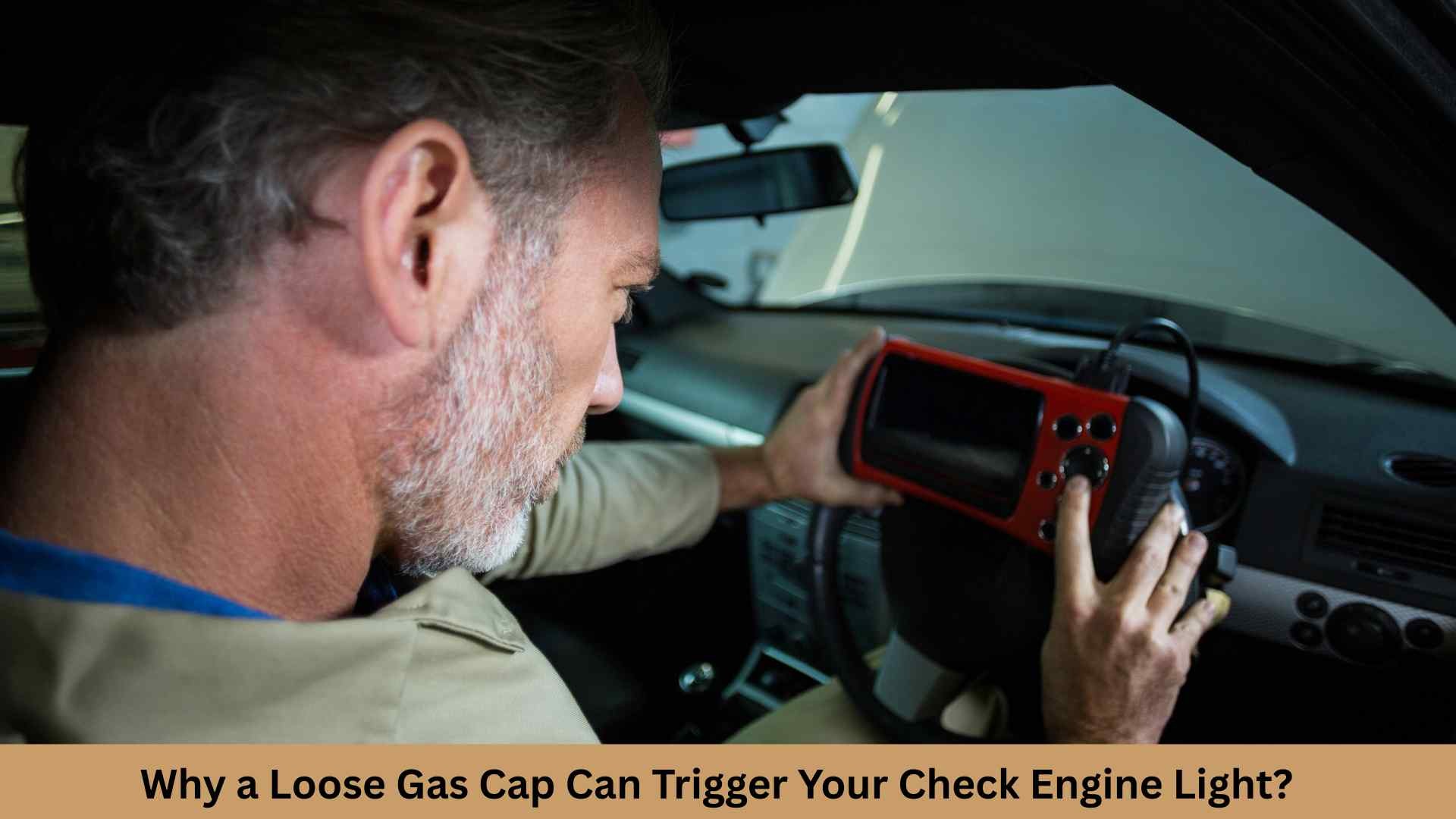
Why a Loose Gas Cap Can Trigger Your Check Engine Light?

Why a Loose Gas Cap Can Trigger Your Check Engine Light?

Quick Checklist: Fixing a Gas Cap Check Engine Light

  • Check if the gas cap is loose after refueling
  • Tighten the cap until it clicks
  • Inspect the rubber gasket for cracks
  • Replace the gas cap if needed
  • Drive normally for the system to reset
  • Run a diagnostic scan if the light stays on

A loose, damaged, or missing gas cap can turn on your car’s check engine light because it affects the EVAP system. The EVAP system stops gas fumes from escaping. If the gas cap isn’t tight, the system senses a leak and warns you with the light. This is usually an easy fix.

What the Check Engine Light Actually Means

The Purpose of the Check Engine Warning

The check engine light is like your car’s “help me” signal. It can stop small problems from getting worse.

  • Alerts drivers to engine, fuel, or emissions problems
  • Monitors car performance through OBD-II
  • Finds small issues before they become big repairs
  • Helps your car pass emissions tests

Systems: Check Engine Light Monitors

This light watches many parts to keep your car running right.

  • Engine combustion efficiency
  • Fuel injection system
  • Oxygen sensors
  • Catalytic converter
  • Ignition parts
  • Evaporative emission control system (EVAP)

Getting a check engine light diagnostic service helps figure out the exact problem.

How a Gas Cap is Connected to the EVAP System

What the EVAP System Does

The EVAP system keeps your car and air clean.

  • Stops gasoline vapors from escaping
  • Stores fumes in a charcoal canister
  • Sends vapors back to the engine to burn
  • Keeps fuel system pressure balanced

Why the Gas Cap Matters

Your gas cap may look small, but it’s very important.

  • Makes an airtight seal on the fuel tank
  • Keeps pressure steady in the fuel system
  • Stops fuel vapor leaks
  • Helps gas mileage and emissions

What Happens When the Gas Cap Is Loose

If the cap isn’t tight, problems happen fast.

  • Air gets into the fuel system
  • EVAP sensors detect a leak
  • The car’s computer saves an error code
  • The check engine light turns on

This is why some drivers search for an engine mechanic near me when the light appears.

Common Gas Cap Problems That Trigger the Check Engine Light

Loose Gas Cap

This is the most common reason.

  • Happens after refueling if not tightened properly
  • Usually fixed by turning the cap until it clicks
  • Light can come on in a few miles

Damaged or Worn Gas Cap Seal

Over time, parts wear out.

  • Rubber gasket cracks or dries
  • Fumes can leak even if the cap looks tight
  • Replacing the cap often fixes it

Missing Gas Cap

A missing cap is simple but serious.

  • Gas fumes escape into the air
  • The EVAP system cannot keep pressure
  • The check engine light comes on fast

Faulty Gas Cap Threads

Sometimes the threads don’t work.

  • The cap cannot tighten correctly
  • The seal is uneven
  • The cap usually needs replacement

Symptoms That Indicate a Loose Gas Cap

Warning Signs Drivers May Notice

Watch for these signs after filling up:

  • The check engine light comes on soon after refueling
  • The smell of gasoline near the car
  • Lower fuel efficiency
  • EVAP system codes during diagnostics

OBD-II Codes Related to Gas Cap Issues

A scan tool can show these codes:

  • P0440 – EVAP system problem
  • P0442 – Small EVAP leak
  • P0455 – Big EVAP leak
  • P0457 – Fuel cap loose or missing

These codes can be read with Expert Engine Diagnostics services.

How to Fix a Loose Gas Cap Check Engine Light

Step 1: Safely Check the Gas Cap

  • Turn off the engine
  • Take off the gas cap
  • Look for damage to the rubber seal

Step 2: Tighten the Gas Cap Correctly

  • Put the cap back on firmly
  • Turn until you hear clicks
  • Make sure it sits evenly

Step 3: Drive the Vehicle Normally

  • The car may reset itself
  • The light often goes off after a few drives

Step 4: Replace the Gas Cap if Needed

  • Gas caps are cheap
  • A new cap usually stops leaks
  • Use the correct cap for your car model

If the light stays on, an auto engine repair service may be needed.

When the Check Engine Light Is NOT Caused by the Gas Cap

Other EVAP System Problems

  • Bad purge valve
  • Broken charcoal canister
  • Cracked vacuum hoses
  • Faulty EVAP sensors

Engine Issues That Also Trigger the Light

  • The oxygen sensor fails
  • Catalytic converter problems
  • Ignition coil or spark plug issues
  • Mass airflow sensor problems

A professional at an auto repair shop in Grand Rapids can find the exact cause.

How Mechanics Diagnose EVAP System Leaks

Diagnostic Scan Tool

  • Reads error codes from the computer
  • Quickly finds EVAP problems

Smoke Testing for Leaks

  • Smoke enters the EVAP system
  • Escaping smoke shows leaks
  • Finds tiny cracks or loose parts

Visual Inspection

  • Check the gas cap
  • Inspect EVAP hoses and connections
  • Test purge and vent valves

Mechanics at an auto repair shop in Grand Rapids do all these checks for a proper diagnosis.

Why You Shouldn’t Ignore a Loose Gas Cap Warning

i) Environmental Impact

  • Gas fumes pollute the air
  • EVAP system keeps emissions low

ii) Potential Long-Term Problems

  • More emissions
  • Less fuel efficiency
  • Harder to spot other engine problems
  • Could fail emissions tests

Even a small leak can cause bigger problems later.

Conclusion

A loose gas cap can make the check engine light turn on because of an EVAP system leak. This system stops gas fumes from escaping. Tightening or replacing the gas cap usually fixes it.

If the light stays on, visit 616 Auto Repair for a professional check. Always check your gas cap after filling up and replace it if worn!

People Also Ask (PAA) About Loose Gas Caps and Check Engine Lights

Q1: Can a loose gas cap really trigger the check engine light?

Yes, a loose gas cap triggers the check engine light because it causes a leak in the EVAP system. The car’s computer sees the pressure loss and turns on the light to warn the driver.

Q2: How long does it take for the check engine light to reset after tightening the gas cap?

After tightening, the check engine light usually turns off after a few driving cycles. The car needs to check the system a few times before the light resets automatically.

Q3: Is it safe to drive with the check engine light caused by a gas cap?

It is generally safe to drive for a short time, but fix it soon. The leak can waste fuel and prevent the system from noticing other engine problems.

Q4: How do I know if my gas cap is bad?

A bad gas cap may have a cracked seal, damaged threads, or may not click when tightened. If the light stays on after tightening, replacing the cap usually fixes the problem.

Q5: How much does it cost to replace a gas cap?

Gas caps usually cost $10 to $30. Replacing a worn or broken cap is cheap and can quickly fix EVAP system leaks and the check engine warning.

Q6: Can a loose gas cap affect fuel economy?

Yes, fuel efficiency can drop because the fuel system loses pressure, and vapors escape. Fixing the cap helps the engine work better and keeps gas from being wasted.

Q7: Will tightening the gas cap clear the engine code?

Tightening may solve the problem, but the code usually clears after a few drives. Sometimes, a diagnostic scan tool is needed to reset the system faster.


Ricardo Navarrete-Mendez

Ricardo Navarrete-Mendez

Ricardo Navarrete-Mendez is the owner of 616 Auto Repair, a trusted full-service automotive repair shop in Grand Rapids, MI, known for professional vehicle maintenance, diagnostics, and repair services. Under Ricardo’s leadership, the team focuses on quality workmanship, transparent service, and customer satisfaction for every car that comes through the garage. His hands-on experience and commitment to excellence have helped build 616 Auto Repair into a reliable choice for local drivers

Call to an Expert