- Bays Available Today
- Bays Available Today
- Bays Available Today
- Bays Available Today
- Bays Available Today
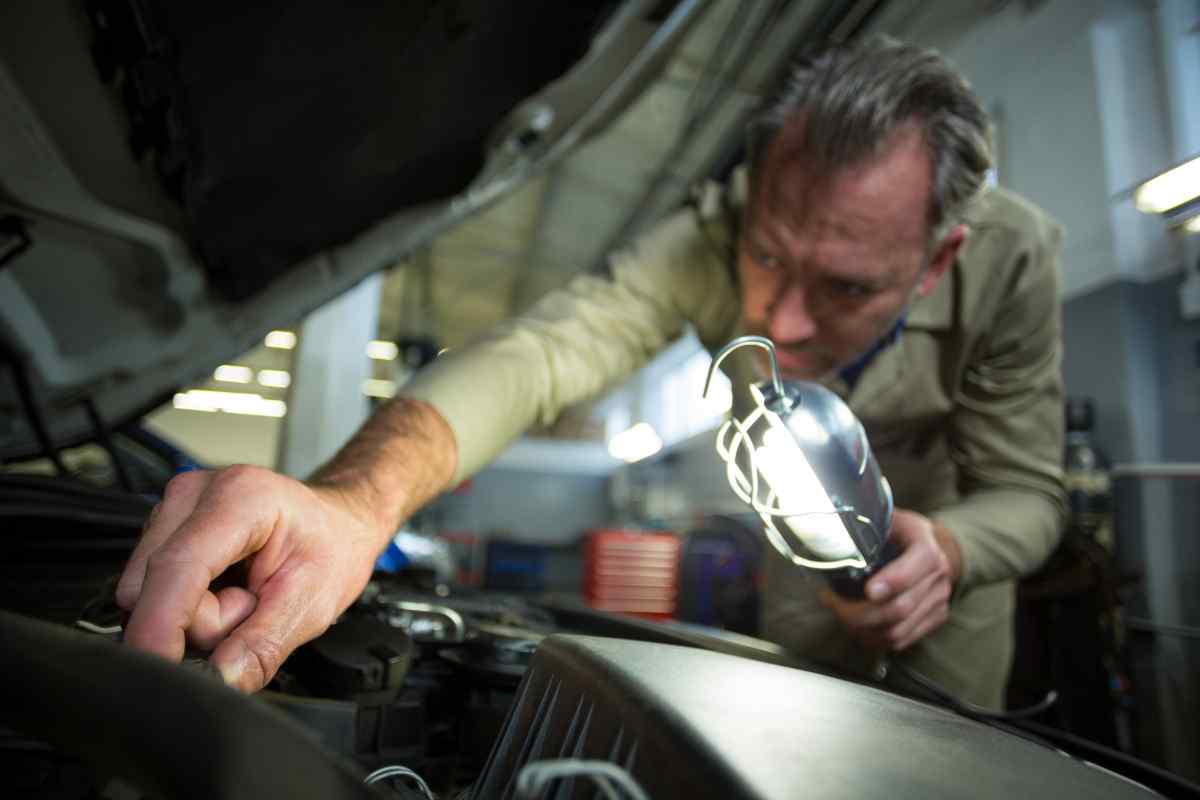
Your check engine light is on because your vehicle detected a fault in the engine or emissions system. The most common causes include a loose gas cap, bad oxygen sensor, misfiring engine, failing catalytic converter, faulty spark plugs, vacuum leaks, or a failing mass airflow sensor.
✅ Solid Check Engine Light
Usually means a non-emergency issue
You can often drive short distances safely
Still needs diagnosis soon
🚨 Flashing Check Engine Light
Serious issue (often engine misfire)
Driving may cause major damage
Stop driving and get it checked immediately
Below are the most common reasons your check engine light comes on, plus the solution in point-wise format.
1) Loose or Damaged Gas Cap
Why it happens
A loose gas cap lets fuel vapors escape, triggering an emissions fault.
Signs
Check engine light comes on after fueling
Fuel smell near the car
Fix (Point-Wise)
Tighten the gas cap until it clicks
If the cap seal is cracked, replace it
Drive 20–50 miles to see if the light clears
If it stays on, get a diagnostic scan
2) Faulty Oxygen Sensor (O2 Sensor)
Why it happens
The oxygen sensor monitors exhaust oxygen levels. When it fails, the engine may run rich and waste fuel.
Signs
Poor gas mileage
Rough idle
Failed emissions test
Fix (Point-Wise)
Perform an OBD2 scan to confirm the code
Replace the faulty oxygen sensor
Clear the code and test drive
Check for exhaust leaks (they can trigger O2 sensor codes)
3) Engine Misfire (Spark Plugs / Ignition Coils)
Why it happens
Misfires occur when the air-fuel mixture doesn’t ignite properly.
Signs
Shaking engine
Loss of power
Flashing check engine light
Strong fuel smell
Fix (Point-Wise)
Replace worn spark plugs
Replace faulty ignition coils
Inspect plug wires (if applicable)
Diagnose fuel injector performance
Do not drive if the light is flashing
4) Catalytic Converter Problem
Why it happens
The catalytic converter reduces emissions. It can fail due to overheating, misfires, or oil burning.
Signs
Rotten egg smell
Sluggish acceleration
Poor fuel economy
Failed emissions test
Fix (Point-Wise)
Diagnose the root cause (misfire, oil burning, fuel issue)
Replace catalytic converter only after fixing the cause
Avoid driving long with misfires (it destroys the converter)
5) Mass Air Flow Sensor (MAF) Failure
Why it happens
The MAF sensor measures air entering the engine. If it fails, the fuel mixture becomes incorrect.
Signs
Hard starting
Rough idle
Poor acceleration
Stalling
Fix (Point-Wise)
Inspect intake hose for cracks
Clean the MAF sensor (only with MAF cleaner)
Replace if cleaning doesn’t help
Recheck air filter condition
6) Vacuum Leak / Intake Leak
Why it happens
A vacuum leak allows extra air into the engine, confusing the ECU.
Signs
High idle
Whistling noise
Rough idle
Lean mixture codes
Fix (Point-Wise)
Perform smoke test to locate the leak
Replace cracked hoses or gaskets
Inspect intake boot and PCV lines
Re-test after repair
7) Bad EVAP Purge Valve or EVAP Leak
Why it happens
The EVAP system prevents fuel vapors from escaping. A leak or purge valve failure triggers a code.
Signs
Light comes on randomly
Gas smell
Hard starting after fueling
Fix (Point-Wise)
Run diagnostic scan for EVAP-related codes
Inspect purge valve operation
Replace purge valve if stuck open
Check hoses and charcoal canister
8) Bad Thermostat or Coolant Temperature Sensor
Why it happens
If the engine isn’t reaching the correct operating temperature, it affects emissions and fuel control.
Signs
Temperature gauge reads low or fluctuates
Heater not warm
Poor fuel economy
Fix (Point-Wise)
Test thermostat opening temperature
Replace thermostat if stuck open/closed
Replace faulty coolant temperature sensor
Bleed air from cooling system
9) Faulty Fuel Injector / Fuel System Issue
Why it happens
A clogged injector or low fuel pressure can cause misfires and lean/rich conditions.
Signs
Rough idle
Hesitation
Misfire codes
Poor fuel economy
Fix (Point-Wise)
Perform fuel pressure test
Run injector balance test
Clean injectors (if minor clog)
Replace injector if failing
10) Bad Battery, Alternator, or Low Voltage Issue
Why it happens
Modern vehicles rely heavily on stable voltage. Low voltage can trigger sensor and module errors.
Signs
Slow cranking
Random warning lights
Electrical glitches
Fix (Point-Wise)
Test battery health
Test alternator charging voltage
Replace battery if weak
Repair charging system if needed
Here’s the exact step-by-step action plan.
If the light is SOLID:
✅ Do this:
Check your gas cap first
Watch for performance issues (shaking, stalling)
Get an OBD2 diagnostic scan ASAP
If the light is FLASHING:
🚨 Do this:
Stop driving as soon as safe
Avoid accelerating hard
Tow the vehicle to a repair shop
Yes, sometimes — but it depends.
You can usually drive if:
The light is solid
The car drives normally
No shaking or overheating
You should NOT drive if:
The light is flashing
Engine is shaking or misfiring
You smell burning or fuel
The car is overheating
You lose power suddenly
These are codes customers commonly see:
P0420 – Catalytic converter efficiency below threshold
P0300 – Random/multiple cylinder misfire
P0171 – System too lean
P0455 / P0442 – EVAP leak (large/small)
P0130–P0167 – Oxygen sensor issues
P0101 – MAF sensor performance
A check engine light is not one problem — it can be hundreds of issues. The only accurate way to know is a proper diagnostic scan with live data.
At 616 Auto Repair, we use professional diagnostic tools to:
Scan fault codes
Inspect the real cause (not just the symptom)
Verify repairs with test drives + live sensor data
If you’re wondering “why is my check engine light on?”, the most common causes are:
Loose gas cap
Oxygen sensor failure
Spark plug or ignition coil issues
EVAP leaks
MAF sensor failure
Vacuum leaks
Catalytic converter problems
The best next step is a proper diagnostic scan — because fixing the wrong part wastes money.
Need a check engine light diagnosis?
Contact 616 Auto Repair today for fast, accurate troubleshooting and reliable repairs.
Because many emissions and sensor problems don’t affect driving immediately. A small EVAP leak or failing oxygen sensor can trigger the light without noticeable symptoms.
Yes, sometimes. If the issue was temporary (like a loose gas cap), the light may turn off after several drive cycles. But if the problem remains, it will stay on
It depends on the vehicle and the issue. A basic scan is quick, but real diagnosis may require testing sensors, fuel pressure, ignition, or smoke tests.
Yes. It’s one of the most common causes because it affects the EVAP system and emissions pressure.